Finding a fragrance manufacturer is not simply about finding a factory that can produce perfume. For importers, distributors, retailers, and fragrance brand owners, the more important question is whether a manufacturer can supply the right products, maintain consistent quality, and support the business as it grows.
Some businesses need ready-to-market fragrance collections they can introduce to their local markets. Others want to develop their own fragrance brands, customize packaging, or build a product range that reflects their target customers. These different goals require different manufacturing approaches. Before contacting a fragrance manufacturer, it is worth understanding how the industry works, what manufacturing capabilities matter, and which partnership model makes the most commercial sense for your business.
What Does a Fragrance Manufacturer Actually Do?
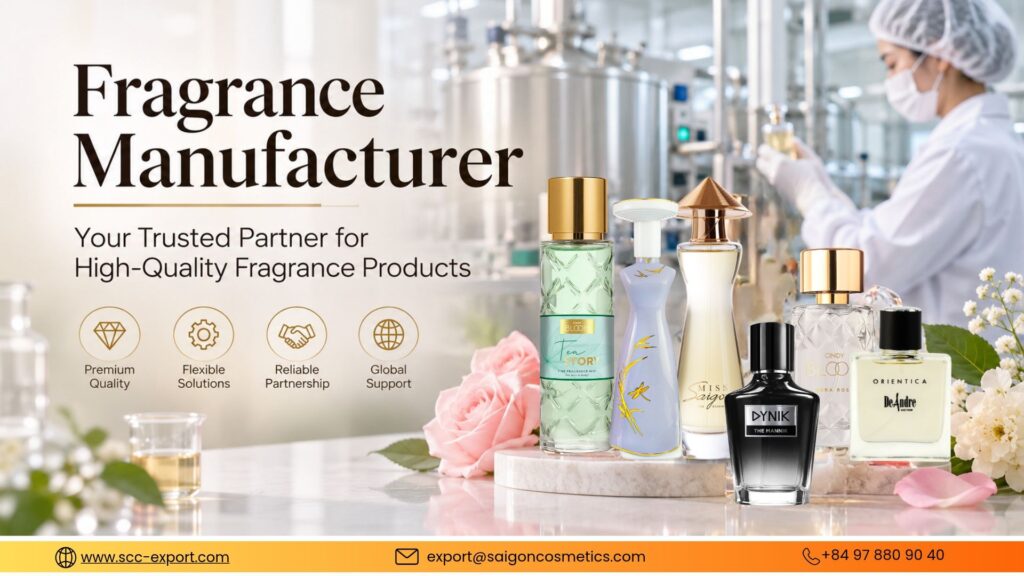
A fragrance manufacturer develops and produces fragrance products for commercial distribution. Depending on its capabilities, the manufacturer may handle product development, fragrance selection, formulation, filling, packaging, quality control, and finished-product preparation.
However, not every company describing itself as a fragrance manufacturer offers the same services.
There is an important distinction between fragrance ingredient suppliers and finished fragrance product manufacturers.
- Fragrance houses primarily create fragrance compositions and supply fragrance oils or concentrates to other manufacturers.
- Finished-product manufacturers turn fragrance formulations into market-ready products, including perfume, body mist, and other scented personal care products.
- Contract manufacturers produce products according to a client’s specifications, brand requirements, or agreed manufacturing arrangement.
Some businesses specialize in one area, while others provide several capabilities under one manufacturing operation.
For buyers, understanding this distinction is essential. If your goal is to import finished perfumes and distribute them through retail stores or e-commerce platforms, you need a partner capable of delivering complete products rather than just fragrance ingredients.
What Types of Fragrance Products Can a Manufacturer Produce?
A manufacturer’s product range directly affects the opportunities available to your business.
Rather than focusing on perfume alone, buyers should consider whether a supplier can support different product categories and price segments.
Common fragrance product categories include:
Fine Fragrance
This category includes Eau de Parfum (EDP), Eau de Toilette (EDT), and other personal fragrance formats.
It is suitable for perfume retailers, distributors, department stores, beauty shops, and businesses building a dedicated fragrance portfolio.
Body Mists and Fragrance Sprays
Body mists offer a lighter fragrance experience and can appeal to consumers looking for everyday use, accessible price points, and multiple scent choices.
They can also complement existing personal care collections.
Perfumed Body Care
Products such as perfumed body lotions, shower gels, and body scrubs combine fragrance with daily personal care routines.
For distributors and retailers, these products create opportunities to build coordinated product collections rather than selling individual fragrances alone.
Home Fragrance
Room sprays and other home fragrance products allow businesses to explore the home care and lifestyle market.
When evaluating a manufacturer, ask whether its production capabilities and existing product portfolio match the categories you intend to distribute.
A supplier with a relevant product range can make product selection and portfolio development more straightforward.
Ready-Made Fragrance Brands or Private Label: Which Is Better for Your Business?
One of the first decisions B2B buyers should make is whether to distribute an existing fragrance brand or develop a product under their own brand.
Neither option is universally better. The right choice depends on your market position, resources, distribution strategy, and long-term objectives.
Option 1: Distribute an Existing Fragrance Brand
Working with an established product collection allows importers and distributors to focus on market introduction, sales channels, and customer development.
This model may be suitable for:
- Importers entering a new fragrance category.
- Distributors looking for products with an established brand identity.
- Retailers expanding their existing beauty and personal care portfolio.
- E-commerce businesses seeking ready-to-market products.
The main advantage is that you do not need to build every element of the product identity from the beginning.
However, you should evaluate whether the brand’s positioning, packaging, product range, and price structure suit your local market.
Option 2: Private Label Fragrance
Private label allows businesses to sell fragrance products under their own brand while working with a manufacturer for production.
Depending on the manufacturer’s services, buyers may be able to select existing fragrance options, packaging formats, and product specifications.
This approach can be suitable for:
- Beauty entrepreneurs launching a fragrance brand.
- Retail chains developing exclusive product collections.
- E-commerce businesses building their own product identity.
- Established brands expanding into fragrance.
Private label can reduce the complexity of building a manufacturing operation from scratch, although product specifications, customization options, and minimum order quantities should be discussed in advance.
Option 3: OEM and ODM Manufacturing
OEM and ODM are additional manufacturing arrangements for businesses with more specific product requirements.
OEM (Original Equipment Manufacturing) generally involves producing according to the buyer’s supplied product specifications or agreed formulation.
ODM (Original Design Manufacturing) allows buyers to work with a manufacturer’s existing development capabilities and product solutions to create or customize products for their brands.
These models may involve discussions about fragrance selection, formulation, bottle design, packaging, labeling, and other product specifications.
Before proceeding, clarify which elements can be customized, who is responsible for each development stage, and what the manufacturer requires from your business.

What Should You Evaluate Beyond the Product Price?
A low quotation does not automatically mean a better manufacturing partnership. For international buyers, the actual cost of sourcing also involves product consistency, packaging, shipping, import requirements, and the ability to replenish inventory.
Here are five areas worth examining.
Product Quality and Batch Consistency
A fragrance may smell appealing in its first sample, but commercial success depends on whether subsequent production batches maintain the approved product specifications.
Ask the manufacturer about:
- Raw material and incoming material inspections.
- In-process quality checks.
- Finished-product inspection procedures.
- Batch identification and traceability.
- Procedures for handling quality issues.
For fragrance products, consistency is especially important because customers expect the same experience every time they purchase a product.
Manufacturing Facilities and Production Capabilities
A company with an actual manufacturing facility offers buyers a clearer opportunity to understand its production operations.
Look beyond factory photographs and ask about its manufacturing location, product categories, production processes, quality systems, and ability to handle repeat orders.
Where possible, arrange a factory visit or request a virtual introduction to the production facilities.
Certifications and Export Documentation
Manufacturing certifications and product documentation are important parts of international sourcing.
Depending on the destination market and product category, buyers may need to review documents such as:
- ISO 9001 quality management certification.
- Applicable GMP or CGMP certifications.
- Safety Data Sheets (SDS/MSDS).
- Product specifications and ingredient information.
- Other documents required by the importing country.
Not every document applies to every product or market. Buyers should identify the requirements of their destination country before confirming an order.
Minimum Order Quantity (MOQ)
MOQ is not simply a manufacturer’s preferred order size. It is also influenced by the product, packaging, components, production setup, and customization requirements.
For example, an existing perfume product with standard packaging may have different minimum requirements from a newly developed fragrance with custom bottles and printed cartons.
When requesting a quotation, clarify:
- MOQ per product or fragrance variant.
- Whether different variants can be combined.
- Packaging minimums.
- Sample availability.
- Repeat-order requirements.
A suitable MOQ should allow your business to manage inventory while maintaining a commercially viable purchasing cost.
Communication and Long-Term Supply Reliability
Manufacturing partnerships do not end when the first shipment leaves the factory.
You may need support with product documentation, order updates, packaging revisions, repeat orders, and new product introductions.
Pay attention to how clearly the supplier communicates during the quotation and sampling stages. A manufacturer that understands your business requirements can make future coordination considerably easier.
How to Prepare Before Contacting a Fragrance Manufacturer
One of the most effective ways to receive a relevant quotation is to provide a clear purchasing brief. Instead of sending a general message asking for a product catalogue and price list, prepare the following information:
| Information | What to specify |
|---|---|
| Business type | Importer, distributor, retailer, brand owner, or e-commerce seller |
| Target market | Country or countries where you intend to sell |
| Product category | Perfume, body mist, perfumed body care, home care. |
| Brand preference | Existing brand or your own brand |
| Estimated quantity | Initial order quantity per SKU |
| Target price | Expected purchasing price or retail price range |
| Packaging | Standard packaging or customized design |
| Timeline | Expected sampling and delivery schedule |
You do not need to have every detail finalized before making an inquiry.
Even an initial estimate helps the manufacturer understand your business model and recommend more suitable products or manufacturing options.
It also makes quotations easier to compare because suppliers are responding to the same requirements.
Why Consider a Fragrance Manufacturer in Vietnam?
Vietnam has become an interesting sourcing destination for international businesses looking for manufacturing partners in Southeast Asia. For fragrance buyers, working with a Vietnamese manufacturer may offer an opportunity to access finished fragrance products, explore different price segments, and build supply relationships within the region.
However, the country of origin alone should not determine your decision. The manufacturer’s actual production capabilities, quality management, product portfolio, export experience, and ability to meet your business requirements remain the more important factors.
Saigon Cosmetics Corporation (SCC): A Fragrance Manufacturer in Vietnam
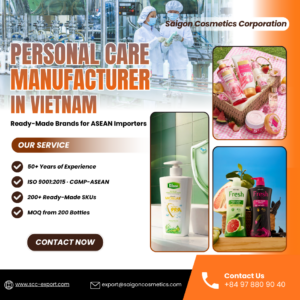
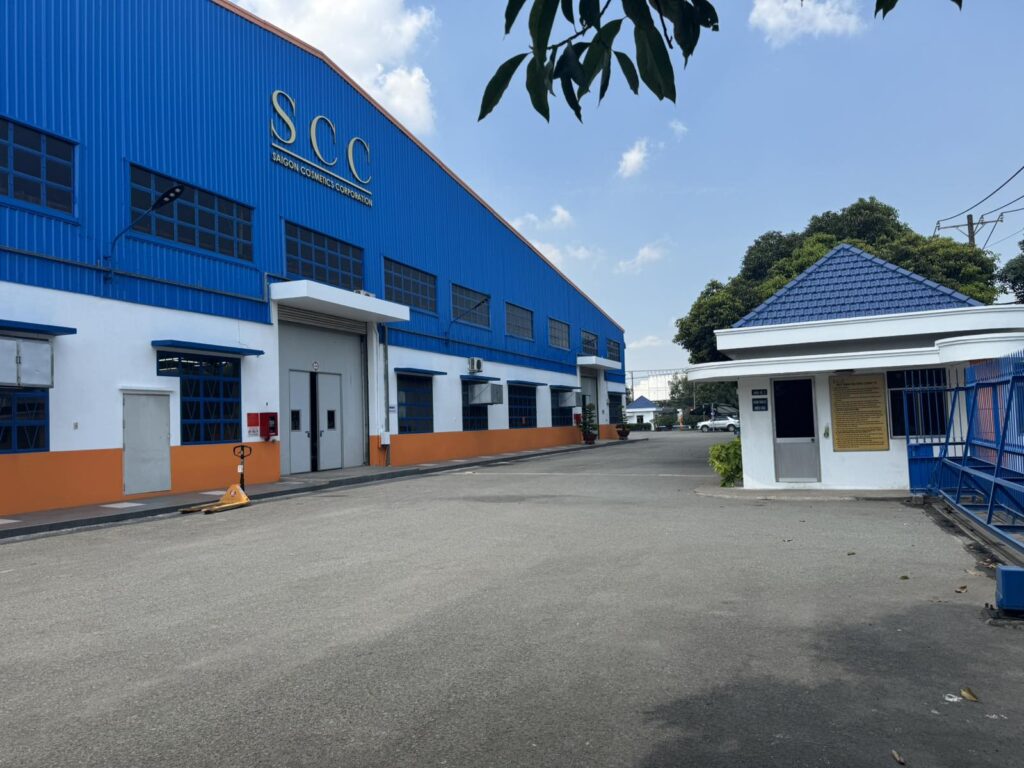
Saigon Cosmetics Corporation (SCC) is a Vietnamese perfume manufacturer with a history dating back to 1999 and manufacturing operations dating to 1990. Located in Cat Lai Industrial Park, Ho Chi Minh City, SCC operates a manufacturing facility covering approximately 17,000 m², supported by a workforce of more than 500 employees.
The company develops and manufactures fragrance and personal care products, with a portfolio that includes:
- Perfume
- Body mists.
- Perfumed shower gels and body lotions.
- Body scrubs and personal care products.
- Selected home care products.
SCC’s business focuses primarily on developing and distributing its own brands, including Miss Saigon, Miss Vietnam, Cindy Bloom, Dynik, De Andre and Cindy, while also supporting OEM manufacturing partnerships.
This gives international buyers two distinct ways to work with SCC.
- For importers and distributors: Explore SCC’s existing fragrance brands and product collections for potential distribution in your market.
- For brand owners and retailers: Discuss OEM opportunities based on your product concept, target customers, packaging requirements, and estimated order volume.
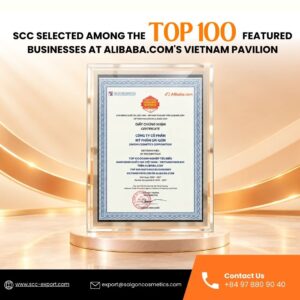
SCC’s manufacturing operations are supported by CGMP-ASEAN and ISO 9001:2015 quality management certifications. The company also has experience exporting products to more than 10 international markets. For perfume products, the current standard MOQ is generally 1,000 pieces, subject to the specific product, packaging, and order requirements. Rather than offering one solution for every buyer, SCC aims to identify a suitable product and cooperation model based on each partner’s market and business objectives.
Questions to Ask Before Choosing Your Manufacturing Partner
Before placing your first order, make sure you understand the following:
1. Are you an actual fragrance manufacturer or a trading company?
Understand which production activities are handled at the manufacturer’s own facility and which are outsourced.
2. Can I distribute your existing fragrance brands?
Ask about available collections, product positioning, pricing, and potential distribution arrangements.
3. Do you support OEM and ODM projects?
Clarify the available customization options and what your business needs to provide.
4. What is your MOQ per SKU?
Request a clear breakdown for standard products and customized projects.
5. What quality and export documents can you provide?
Discuss the documents applicable to your product and destination market.
6. Can you support repeat orders and long-term distribution?
Understand production lead times, product availability, and the process for replenishing stock.
7. Can I evaluate samples or visit your factory?
Sampling and factory visits can help you assess whether the manufacturer meets your expectations before committing to larger orders.
Frequently Asked Questions About Fragrance Manufacturers
What is the difference between a fragrance manufacturer and a perfume supplier?
A fragrance manufacturer produces fragrance products or fragrance ingredients, depending on its specialization. A perfume supplier is a broader term that may include manufacturers, distributors, wholesale perfume, and trading companies.
Buyers should confirm whether a supplier owns production facilities or sources finished products from third parties.
How much does it cost to manufacture perfume?
The cost depends on fragrance concentration, formulation, bottle design, packaging materials, order quantity, and customization requirements.
The best way to obtain an accurate quotation is to provide the manufacturer with your preferred product type, quantity, packaging specifications, and target price.
What is the typical MOQ for fragrance manufacturing?
There is no universal MOQ across the fragrance industry.
Existing products with standard packaging may have different minimum requirements from custom-developed products. Always request MOQ details per SKU and confirm whether packaging components have separate minimum quantities.
Can I start my own perfume brand without owning a factory?
Yes. Private label, OEM, and ODM manufacturing arrangements allow businesses to work with an existing manufacturer instead of establishing their own production facilities.
The specific level of customization depends on the manufacturer’s capabilities and the agreed project requirements.
How do I choose between an existing fragrance brand and private label?
If you want to focus on importing, distribution, and market expansion, an existing brand may be a practical starting point.
If brand ownership and long-term product differentiation are your priorities, private label or OEM/ODM may be more suitable.
Your decision should consider market demand, investment, sales channels, and expected order volume.
Looking for a Fragrance Manufacturer for Your Business?
Choosing a manufacturing partner is a decision that affects more than your first purchase order. It influences your product positioning, inventory planning, customer experience, and ability to expand into new markets. Whether you are looking for ready-to-market fragrance collections or exploring the development of your own brand, the first step is finding a manufacturer that understands your business requirements.
Saigon Cosmetics Corporation (SCC) welcomes inquiries from international importers, distributors, retailers, and brand owners interested in fragrance products and manufacturing partnerships.
Contact our export team to discuss your product requirements, target market, and potential cooperation opportunities.
Saigon Cosmetics Corporation (SCC)
Phone: +84 97 880 90 40
Email: export@saigoncosmetics.com
Website: www.scc-export.com