For importers and distributors, building a successful beauty business involves more than selecting a few products with strong sales potential. A well-structured product portfolio should address different consumer needs, offer complementary product categories and support the company’s long-term distribution strategy.
For example, a business specializing in perfumes may expand into body mist, shower gel and body lotion to create a more comprehensive personal care offering. Similarly, a retailer already selling personal care products may introduce fragrances or home fragrance products to broaden its selection. However, expanding a product portfolio does not mean importing as many products as possible. The key is to identify core product categories, select complementary items and work with a supplier capable of supporting future business development.
This is why many international buyers consider a beauty products manufacturer in Vietnam that offers multiple product categories rather than a supplier specializing in only one product type. So, where should businesses start, and how can they build a product portfolio that fits their target market?
The Beauty Business Is More Than Selling Individual Products
One common challenge when building a product portfolio is selecting products independently without considering how they relate to one another. In reality, consumers often have multiple beauty and personal care needs. Someone who enjoys wearing perfume may also be interested in body mist, shower gel or body lotion with complementary fragrance profiles. For distributors, this creates opportunities to develop connected product categories instead of relying on individual items.
From One Core Product to a Complementary Product Portfolio
Consider an importer specializing in fragrances. Rather than offering only Eau de Parfum (EDP), the business could expand its portfolio to include:
- Fragrance: EDP for men and women.
- Body Fragrance: Body mist and fine fragrance mist.
- Body Care: Shower gel, body lotion and body scrub.
- Deodorant: Deodorant sprays and roll-on products.
These categories serve different consumer needs while complementing one another commercially. For example, a retailer could introduce a coordinated body care collection featuring body mist, shower gel and body lotion. A distributor could also organize product collections around men’s grooming, women’s fragrance or different scent preferences. This approach creates opportunities for cross-selling, offers consumers more choices and helps businesses develop a more comprehensive product portfolio.
A Larger Product Range Does Not Always Mean a Better Business
An effective portfolio does not necessarily require hundreds of SKUs. Each product should serve a clear commercial purpose:
- Core products: Establish the identity of the product portfolio.
- Complementary products: Expand consumer choices.
- New products: Provide opportunities to test market demand.
- Seasonal collections: Support promotional campaigns and gifting occasions.
Instead of importing too many products at once, distributors should prioritize categories that match their target customers and expand gradually based on actual market performance.
Which Beauty Product Categories Should Your Business Consider?
When evaluating a beauty products manufacturer in Vietnam, businesses should consider not only the number of available products but also the commercial role of each category.
The following four categories offer practical opportunities for businesses developing a beauty and personal care portfolio.
Fragrance – Products That Create Brand Identity
Fragrance is a versatile category with opportunities across different consumer segments, from everyday scents to premium perfume collections.
Common product formats include:
- Eau de Parfum (EDP).
- Men’s and women’s perfumes.
- Themed fragrance collections.
- Body mist and fine fragrance mist.
For distributors, fragrance can serve as a key category that gives their product portfolio a recognizable identity.
Businesses can explore different scent profiles and product formats to reach specific customer segments and retail channels.
Suggested product combination: Perfume + Body Mist + Deodorant.
Body Care – Products for Everyday Personal Care
Unlike fragrances, which are often selected based on personal preferences and scent profiles, body care products are closely connected to regular daily routines.
Popular products include:
- Shower gel and body wash.
- Body lotion.
- Body scrub.
- Bar soap.
- Deodorant products.
For retailers and distributors, body care can complement an existing fragrance portfolio.
For example, a coordinated collection featuring shower gel, body lotion and body mist with complementary scents can create a more consistent product experience for consumers.
Suggested product combination: Shower Gel + Body Lotion + Body Scrub.
Hair Care – Expanding into Everyday Personal Care
Hair care offers another opportunity for businesses looking to broaden their product range.
Common categories include:
- Shampoo.
- Conditioner.
- Hair treatment.
- Hair serum.
For distributors already operating in the beauty and personal care industry, adding hair care products can expand their selection without requiring a completely different customer base.
However, businesses should evaluate product positioning, consumer demand and local competition before introducing new hair care categories.
Suggested product combination: Shampoo + Conditioner + Body Care.
Home Fragrance – Extending from Personal Care to Living Spaces
Another potential direction is home fragrance.
While personal fragrance and body care focus on individual use, home fragrance addresses scent experiences in residential, office and other indoor environments.
Relevant products may include:
- Room spray.
- Home fragrance sprays.
- Other household scent products.
For businesses already distributing perfumes, home fragrance can provide an additional product category that extends their offering from personal fragrance to living spaces.
Suggested product combination: Personal Fragrance + Home Fragrance.

How to Build a Product Portfolio That Fits Your Sales Channel
The same beauty product may perform differently depending on the distribution channel. A portfolio suitable for supermarkets may not necessarily be the best choice for specialized beauty stores or online sellers. Instead of creating one product range for every customer, businesses should consider the characteristics of each sales channel.
Supermarkets and Retail Chains
Supermarkets and retail chains generally require product ranges that serve different consumer groups and fit their merchandising strategies.
Important considerations include:
- Clear product functions and descriptions.
- Packaging suitable for retail displays.
- Consistent product and carton specifications.
- Reliable supply arrangements.
- A product range that supports complementary merchandising.
Potential product categories: Perfume, shower gel, body lotion, shampoo and other personal care products.
Beauty Stores
Consumers shopping at beauty stores often pay attention to brand identity, product experience, packaging design and the variety of available collections.
Distributors can consider building their portfolios around:
- Fragrances with different scent profiles.
- Body mist.
- Body lotion and shower gel.
- Coordinated body care collections.
Combining products with related brand identities or fragrance directions can help retailers create more recognizable product displays.
E-commerce and Online Sellers
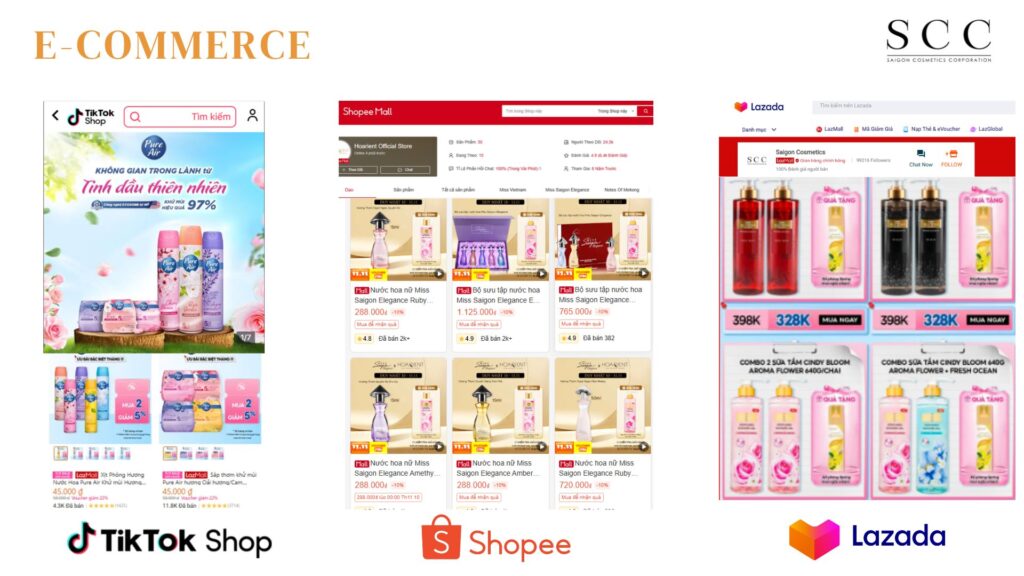
For businesses selling through Shopee, Lazada, TikTok Shop and other e-commerce platforms, product selection should also consider how products are presented and marketed online.
Key factors include:
- Product images that attract attention on digital platforms.
- Packaging and sizes suitable for shipping.
- Clear and easy-to-understand product information.
- Opportunities to create bundles and product sets.
- A product range that supports different marketing campaigns.
For example, online sellers may combine body mist and shower gel into personal care bundles or create themed gift sets for seasonal campaigns.
Importers and Regional Distributors
For importers and regional distributors, the challenge is not simply selecting individual products but developing a portfolio that can serve multiple local sales channels.
A distributor may consider:
- Fragrance to establish a dedicated perfume category.
- Body care to expand personal care offerings.
- Hair care to reach additional consumer segments.
- Home fragrance to introduce complementary household products.
However, expanding into multiple categories should be based on actual market demand, product regulations and inventory management capabilities.

Why a Multi-Category Supplier Can Simplify Your Sourcing Strategy
As a business expands its product portfolio, the number of suppliers and operational contacts may also increase. When each product category comes from a different manufacturer, businesses may need to manage separate quotation processes, packaging standards, production schedules and ordering arrangements. This is why importers may benefit from considering a manufacturer capable of supplying several relevant product categories.
Simplifying Product Sourcing
Working with a supplier that offers multiple product categories can reduce fragmentation in the sourcing process. Instead of starting a completely separate supplier search for every product category, businesses can discuss related product requirements with the same manufacturing partner. This does not necessarily mean all products are manufactured on the same production line. However, it can make communication and supplier coordination more convenient.
Creating Opportunities for Complementary Product Collections
A manufacturer with multiple product categories may provide opportunities to develop related product collections.
| Core Category | Complementary Products |
|---|---|
| Fragrance | Body Mist, Deodorant |
| Body Care | Shower Gel, Body Lotion, Body Scrub |
| Hair Care | Shampoo, Conditioner |
| Home Fragrance | Room Spray |
For distributors, this approach offers opportunities to expand their product selection without necessarily entering an entirely new business category.
Supporting Flexible Market Expansion
Businesses can start with one core product category and gradually introduce additional products as they gain a better understanding of consumer demand.
For example, an importer initially distributing perfumes may later introduce body mist and complementary body care products.
A phased approach can help businesses manage their product portfolios more effectively and avoid spreading resources across too many categories before sufficient market data is available.
From Product Selection to Market Expansion: A Practical Approach
Rather than importing a large number of products immediately, businesses can develop their portfolios in several stages.
Stage 1: Identify Your Core Product Category
First, identify the product category that best matches your existing customers and distribution capabilities.
Consider the following questions:
- What products are your target customers already purchasing?
- Which product categories does your business understand best?
- Is your main sales channel supermarkets, retail stores or e-commerce?
- Which price segments are suitable for your target market?
Products should not be selected simply because they are trending. Their market potential must also align with your distribution capabilities and customer demand.
Stage 2: Evaluate Market Response
After selecting your core category, monitor:
- Customer interest.
- Sales performance.
- Feedback on product quality and packaging.
- Price competitiveness.
- Repeat purchase behavior and demand for complementary products.
These insights can help determine which categories deserve further investment.
Stage 3: Introduce Complementary Products
Once the core category has established its position, businesses can consider adding related products.
For example:
- Expand from perfume into body mist.
- Introduce shower gel and body lotion alongside body mist.
- Extend from body care into hair care.
Prioritize products that appeal to your existing customer base so you can make better use of your current distribution network and marketing resources.
Stage 4: Develop a Long-Term Product Portfolio
With a clearer understanding of market demand and sales performance, businesses can consider:
- Expanding into new product segments.
- Introducing additional brands and collections.
- Developing private-label products.
- Exploring long-term distribution arrangements.
- Planning seasonal and promotional product collections.
A successful product portfolio is not necessarily the one with the largest number of products. It is the one structured around customer needs, distribution channels and long-term business objectives.
SCC – A Multi-Category Beauty Products Manufacturer in Vietnam
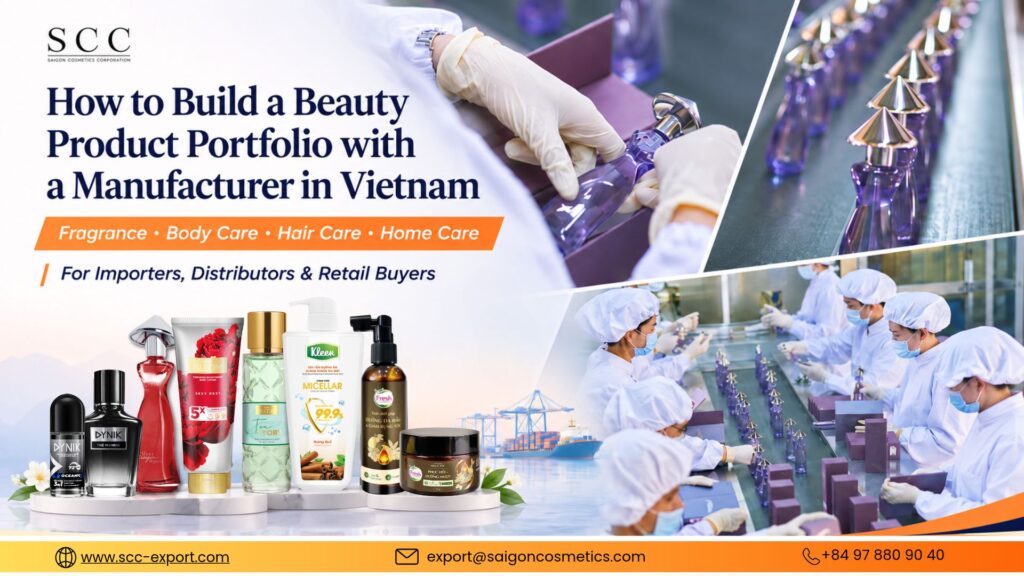
For businesses looking for a beauty products manufacturer Vietnam, the ability to access multiple relevant product categories can be an important consideration when developing a distribution strategy. Saigon Cosmetics Corporation (SCC) is a Vietnamese perfume manufacturer with more than 50 years of industry heritage, developing its own brands and supplying products across fragrance, body care, hair care and home care. Rather than focusing on a single product category, SCC develops a portfolio designed to address different beauty and personal care needs.

Fragrance – Perfumes and Scented Products
SCC develops several fragrance brands, each with its own identity and market positioning:
- Miss Saigon: A fragrance brand inspired by Vietnamese culture, incorporating distinctive design elements associated with Vietnam.
- Miss Vietnam: A premium fragrance collection inspired by Vietnamese heritage and craftsmanship.
- Cindy and Cindy Bloom: Fragrance and body care products designed for everyday consumer needs.
- Dynik: A men’s fragrance brand with a modern positioning.
- Notes of Mekong: A fragrance collection inspired by the landscapes and character of the Mekong region.
These brands provide options for importers looking to develop fragrance portfolios with different styles and market segments.
Body Care – Products for Everyday Personal Care
SCC’s body care portfolio includes:
- Shower Gel.
- Body Lotion.
- Body Scrub.
- Deodorant.
- Other personal care products.
These categories can complement perfumes and body mist, allowing distributors to develop coordinated personal care collections.
Hair Care – Hair Care Products
SCC also develops hair care products, including shampoo and related product categories.
This range provides additional options for distributors seeking to expand from fragrance and body care into everyday personal care products.
Home Care – Products for Living Spaces
Beyond personal care, SCC also offers home fragrance and household care products, including room sprays.
This category provides an opportunity for businesses to explore scented products for living spaces alongside their existing personal fragrance portfolios.
Manufacturing Capabilities and Brand Development
SCC operates a 17,000 m² manufacturing facility in Cat Lai Industrial Park, Ho Chi Minh City, with a workforce of more than 500 employees.
The company’s manufacturing and quality management systems include:
- ISO 9001:2015 certification.
- ASEAN Cosmetic Good Manufacturing Practice (CGMP) certification.
In addition to manufacturing, SCC focuses on developing its own brands while offering OEM/ODM cooperation opportunities for businesses interested in developing products under their own brands.
With more than 50 years of industry experience and exports to over 10 countries, SCC continues to develop its manufacturing capabilities and build long-term relationships with international importers and distributors.
Frequently Asked Questions About Beauty Products Manufacturers Vietnam
Which beauty products are suitable for new distributors?
Depending on the target market and sales channel, businesses may consider perfume, body mist, shower gel, body lotion or shampoo. It is generally advisable to begin with categories that match existing customers and gradually introduce complementary products.
Can I source fragrance and personal care products from one manufacturer?
Yes, provided the manufacturer has the capabilities to supply both categories. Working with one partner across relevant product categories may simplify communication, order coordination and product portfolio planning.
How should distributors select beauty product categories?
Distributors should consider their target customers, sales channels, price segments and expected demand. Rather than importing too many categories at once, businesses should expand their portfolios gradually based on market performance.
Can one supplier support multiple beauty product categories?
Some manufacturers develop and supply multiple categories, such as fragrance, body care and hair care. However, buyers should confirm the actual product range, manufacturing capabilities and supply conditions for each category.
Does SCC offer established brands for international distribution?
Yes. SCC develops several proprietary brands, including Miss Saigon, Miss Vietnam, Cindy, Cindy Bloom, Dynik and Notes of Mekong. Importers and distributors can contact SCC to explore product portfolios and international distribution opportunities.
Does SCC provide OEM and ODM manufacturing services?
SCC offers OEM/ODM cooperation opportunities. Each project is evaluated based on product categories, technical specifications, order quantities and individual business requirements.
Conclusion: Build Your Beauty Product Portfolio with a Manufacturer in Vietnam
In the beauty business, growth does not come only from selecting one promising product. It also depends on the ability to develop a product portfolio that matches customer needs and distribution strategies.
Combining fragrance, body care, hair care and home fragrance can create additional opportunities for businesses. However, portfolio expansion should always be guided by actual market demand, sales potential and long-term business objectives.
For international importers and distributors seeking a beauty products manufacturer Vietnam, Saigon Cosmetics Corporation (SCC) offers access to diverse product categories, established Vietnamese brands and manufacturing cooperation opportunities tailored to different business requirements.
Looking for a beauty products manufacturer in Vietnam to expand your product portfolio?
Contact SCC Export to explore our brands, product categories and international distribution opportunities.
Contact Saigon Cosmetics Corporation (SCC)
Phone: +84 97 880 90 40
Email: export@saigoncosmetics.com
Website: www.scc-export.com