Selecting a perfume manufacturer is not simply a matter of who has the best-looking catalog or the lowest price. If you’re a fragrance distributor operating in the Philippines, Thailand, or any other Asian market, the supplier you choose becomes part of your business. Their compliance record, production performance, and reputation will affect your business the moment products leave their factory.
Before signing any agreement, it is worth slowing down and asking the questions that truly matter: certifications, real production capacity, private-label flexibility, tariff advantages, and whether the manufacturer genuinely understands your target market or is simply trying to sell into it.
Choosing a Supplier Is a Business Decision, Not Just a Purchasing Decision
One lesson many fragrance distributors learn the hard way is that a single problematic shipment can erase years of trust built with retailers.
Not necessarily because the product itself is poor, but because the shipment gets delayed by customs, a certification turns out to be self-declared rather than independently audited, or the formulation does not match what was originally promised. In the fragrance industry, where margins are already competitive and shelf space is limited, these issues create costs that never appear on an invoice.
This matters even more today because Southeast Asia’s fragrance market continues to grow rapidly. The Philippine fragrance market is expanding at approximately 13.9% annually, making it one of the fastest-growing markets in ASEAN. While that creates opportunity, it also means more competitors are targeting the same retailers, distributors, and consumers. The fragrance distributors that perform best are often those who secure reliable manufacturing partners early and spend less time managing avoidable problems.
What a Fragrance Distributor Should Verify Before Signing
Several factors separate a manufacturer that is genuinely prepared for long-term partnership from one that is simply good at sales presentations.
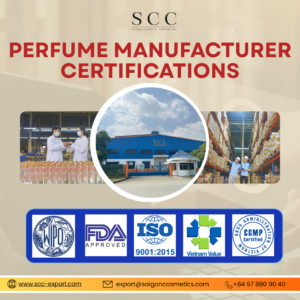
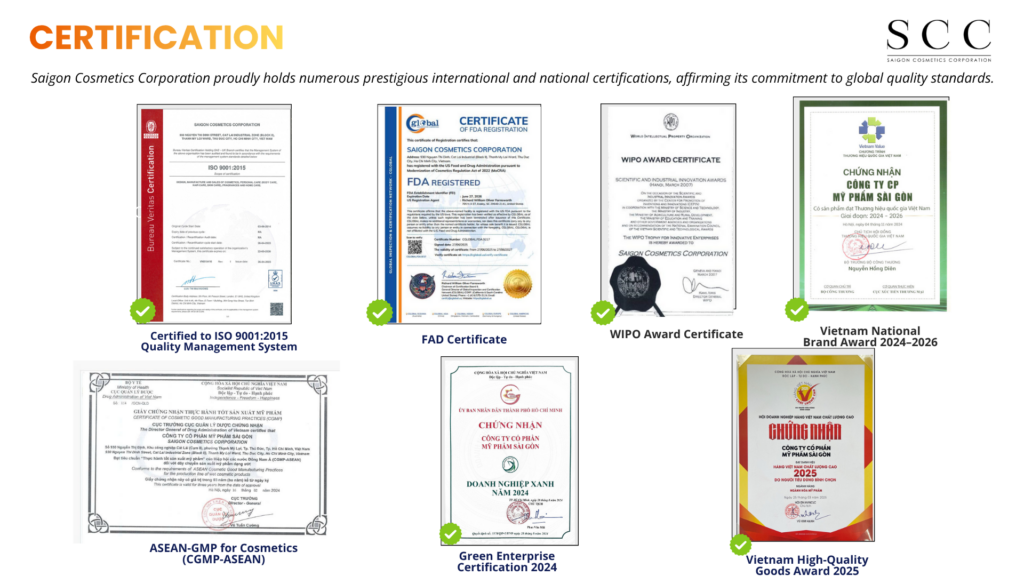
Certifications should be verifiable, not just marketing claims. Anyone can place “ISO Certified” on a presentation slide. What matters is obtaining the actual certificate issued by a recognized third-party auditing organization, along with CGMP-ASEAN certification for the production facility. CGMP-ASEAN certification deserves special attention because it quietly eliminates many smaller manufacturers that cannot meet the standard.
Ask for real production figures, not theoretical capacity. There is a significant difference between “we can produce up to X” and “we are currently producing X.” If a manufacturer cannot provide actual monthly production data, it becomes difficult to know whether your business will be prioritized when larger orders arrive.
Product portfolio diversity matters. If a supplier only manufactures one fragrance type and simply applies different labels, a fragrance distributor may quickly become trapped in a narrow segment. A strong manufacturing partner should support multiple product categories, allowing you to expand your brand portfolio across men’s fragrances, women’s fragrances, body mists, air care products, and other scented products.
More importantly, the manufacturer should have production capabilities that allow expansion into shower gels, shampoos, personal care, and even home care products as your business grows. A supplier with this flexibility is not simply selling you a product SKU—it is helping you build an entire brand ecosystem.
Tariff advantages are often overlooked. They may not appear on a quotation sheet, but they directly affect your landed cost. For example, perfume manufacturer in Vietnam exporting under the ASEAN Trade in Goods Agreement (ATIGA) can ship products into the Philippines and Thailand with 0% import tariffs. This structural advantage can make a meaningful difference compared with suppliers from Korea or China.
Existing OEM clients tell a story that sales presentations cannot. If a manufacturer already supplies recognized pharmacy chains, retailers, or consumer brands, it means they have successfully passed another company’s supplier qualification process. It is not a guarantee, but it is a valuable indicator.
SCC as a Potential Manufacturing Partner
Saigon Cosmetics Corporation traces its roots back to the former Imortel Perfumes France factory. The facility was nationalized in 1975, rebuilt in 1990, and officially established as Saigon Cosmetics Corporation in 1999.
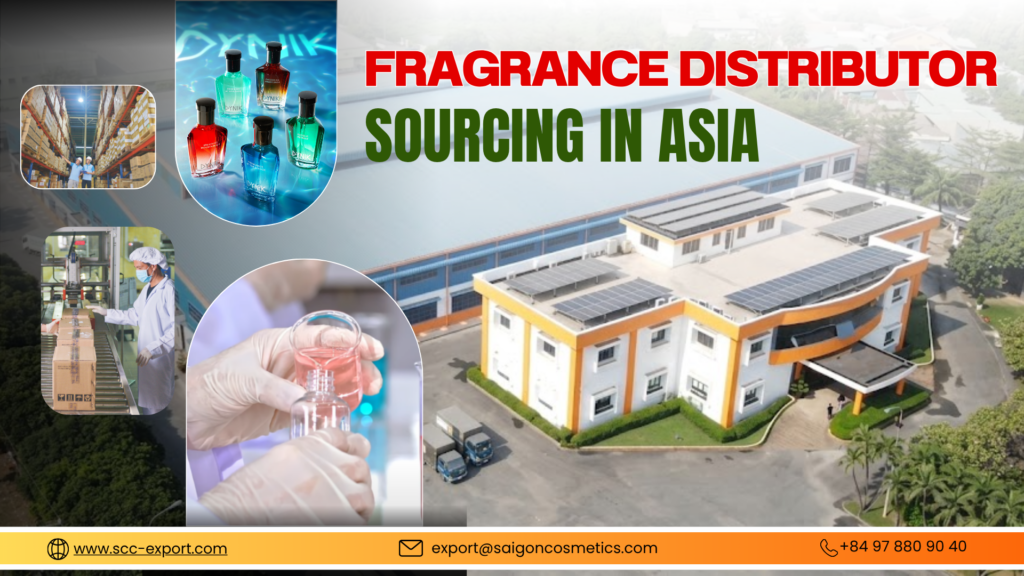
Today, SCC operates a 17,000m² facility in Cat Lai Industrial Park, Ho Chi Minh City, including approximately 6,000m² of production space, supported by around 500 employees.
For fragrance distributors conducting due diligence, a few notable points include:
- ISO 9001:2015 certification, US FDA registration, CGMP-ASEAN certification, and Green Enterprise Certification 2024
- Fragrance production capacity exceeding 400,000 bottles per month
- Product categories extending beyond fragrances to include body mists, personal care products, and scented consumer goods
- Confirmed OEM customers including Pharmacity, Jollibee, LOTTE Mart, GO!, CoopMart, and Miniso
- Export activities across 10 markets, including the Philippines, Cambodia, Myanmar, the United States, China, Laos, Indonesia, Malaysia, and Singapore
- ASEAN-origin manufacturing benefits under ATIGA, enabling exports to the Philippines and Thailand with 0% import duties
- More than 26,000 active domestic points of sale across traditional trade, modern retail chains such as AEON, LOTTE Mart, WinMart, Guardian, and Emart, as well as SCC-operated premium retail stores
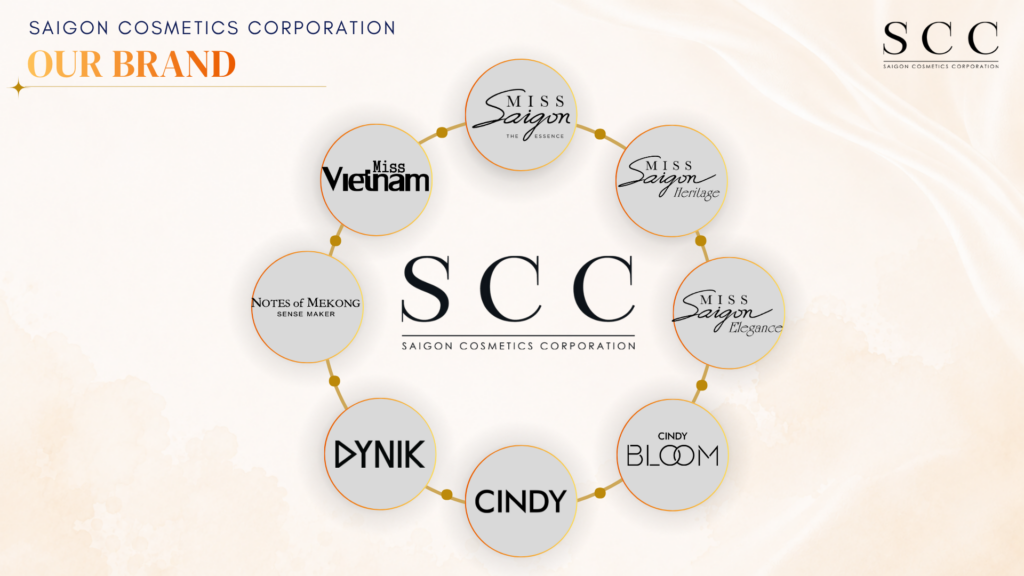
From a product perspective, SCC’s portfolio ranges from culturally inspired brands such as Miss Saigon, Miss Vietnam, and Notes of Mekong to mass-market brands including Dynik, Cindy, and Saigon. The company also offers younger consumer-focused lines such as Cindy Bloom, along with a broad range of home care, body care, and hair care products.
For a fragrance distributor, this diversity creates opportunities to build a broader product portfolio through a single supplier relationship rather than managing multiple manufacturers.
The Real Origin of Fragrance Quality
This topic is often overlooked during supplier discussions, but it should not be.
Southeast Asia’s hot and humid climate presents unique challenges for fragrance performance. A formulation that performs well in a temperate climate may fade quickly in Manila or Bangkok if the fragrance oil concentration and quality are not properly designed for local conditions.
Two questions every fragrance distributor should ask are:
- Where do the fragrance oils actually come from?
- Do they comply with International Fragrance Association (IFRA) standards?
IFRA compliance is not merely a technical requirement. It affects allergen labeling, restricted ingredients, and regulatory acceptance, all of which are receiving increasing scrutiny from both buyers and regulators across the region.
SCC sources fragrance oils through partnerships with internationally recognized fragrance houses, including Robertet, Firmenich, and Givaudan. These are names that experienced fragrance distributors will immediately recognize. As a result, SCC products benefit from consistent fragrance quality and performance across production batches.
How Does the OEM Process Actually Work?
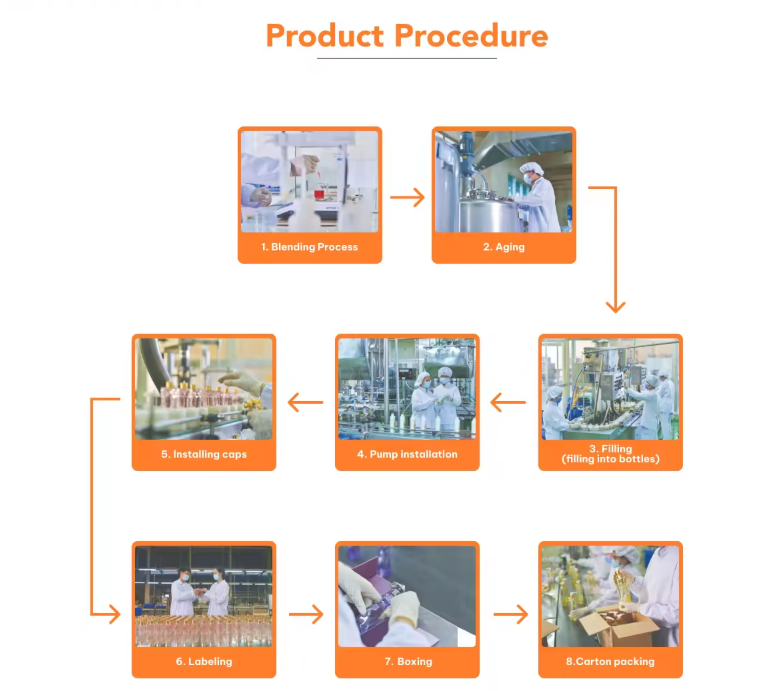
For fragrance distributors launching a private-label brand for the first time, the process generally follows these steps:
- Concept Development and Fragrance Direction – Define fragrance family, market positioning, and target price range.
- Sample Development – The manufacturer develops fragrance samples for evaluation and refinement.
- Packaging Design and Bottle Selection – Bottles, caps, labels, and cartons are finalized, often in parallel with sample development.
- Regulatory Documentation and Product Registration – Required documents are prepared for local regulatory authorities.
- Mass Production and Quality Control – Large-scale production begins with quality checks throughout the manufacturing process.
- Logistics and Export Support – Products are shipped with the necessary customs and export documentation.
Understanding this sequence helps a fragrance distributor identify where delays are most likely to occur. In many cases, formulation approval and regulatory registration take longer than the manufacturing process itself.
Manufacturers that can explain this process clearly and transparently are often those with extensive OEM experience.
Contact SCC
If you’re weighing a fragrance supply partner for the Philippines, Thailand, or elsewhere in Asia, SCC’s export team can be reached directly:
- Email: export@saigoncosmetics.com
- Phone: +84978809040
- Website: www.scc-export.com
- Location: Cat Lai Industrial Park, Ho Chi Minh City, Vietnam