Finding the right wholesale perfume supplier is an important step for importers, fragrance distributors, and retailers looking to expand their product range. Whether you sell through physical stores, retail chains, e-commerce marketplaces, or your own website, choosing the right supplier can directly affect your operating costs and ability to compete in the market.
When searching for buy perfumes wholesale prices, businesses should look beyond the price per bottle. Product quality, minimum order quantity (MOQ), shipping costs, supply reliability, and suitability for the target market all need to be considered before placing an order.
In this guide, we will explain what affects wholesale perfume prices, how to choose products for different business models, and what to look for when selecting a reliable perfume supplier.
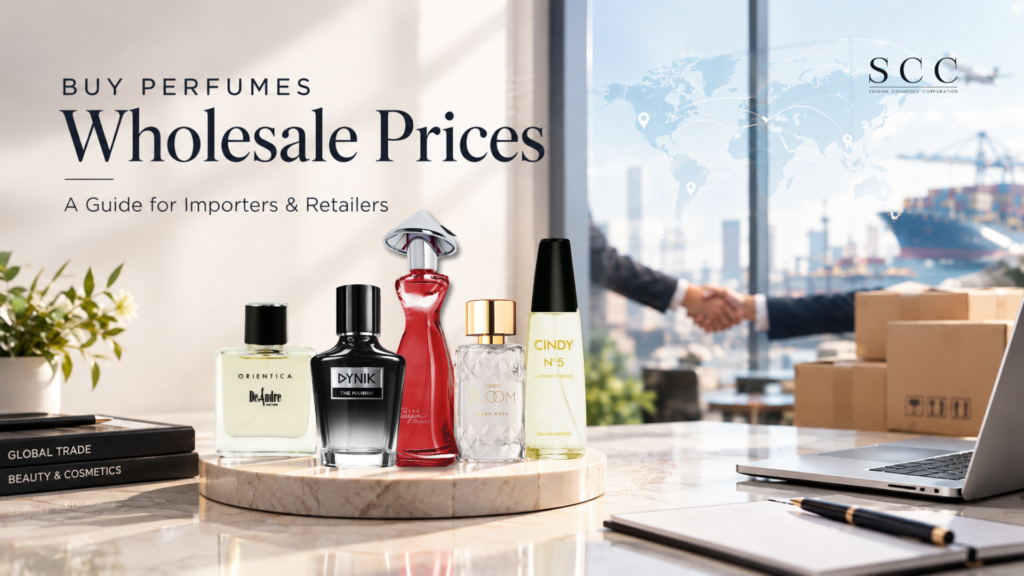
What Factors Affect Wholesale Perfume Prices?
Wholesale perfume prices are the prices offered for orders intended for resale, distribution, or other business purposes. The actual price depends on the product, order quantity, and agreed trading terms. Your position in the supply chain also affects the price. Buying from a wholesaler, a trading company, or directly from a manufacturer involves different costs. Each intermediary may add its own profit margin. Buying directly from a manufacturer can reduce the number of intermediaries and make it easier to verify product origin, certifications, and production capabilities.
Fragrance Quality and Formula
Fragrance ingredients, fragrance concentration, formula complexity, and stability requirements can all affect production costs. As a result, perfumes with the same bottle size may have very different prices and fragrance experiences. SCC sources fragrance ingredients from international fragrance companies, including Robertet, Firmenich, and Givaudan.
When comparing products from different suppliers, businesses should evaluate product samples, specifications, and quality standards rather than relying on quoted prices alone.
Bottle, Packaging, and Product Design
Bottle design, glass quality, caps, spray pumps, cartons, and decorative details all contribute to the final product cost. A standard glass bottle, for example, differs in cost from a ceramic bottle, such as those used in SCC’s Miss Vietnam perfume collection, which features Minh Long porcelain.
For distributors and physical retailers, packaging should match the target customer segment and suit the in-store shopping experience. For online sellers, product appearance also plays an important role in brand presentation and product listings.
Minimum Order Quantity (MOQ)
MOQ perfume is an important factor to consider when choosing a wholesale supplier, as order quantity can affect both the unit price and the total investment required. Some suppliers offer different prices for different order volumes, but businesses should always confirm the actual pricing rather than assume that larger orders are automatically more cost-effective.
If sales demand has not yet been established, ordering too much stock just to secure a lower unit price can increase inventory pressure and tie up working capital. Importers, distributors, and retailers should choose an order quantity that matches their market demand, sales forecasts, and available budget.
Brand Positioning
Perfumes in the same bottle size can have different prices depending on their market positioning. Mass-market and premium fragrances may differ in fragrance ingredients, packaging, and overall brand presentation. Because wholesale prices depend on several factors, SCC does not publish fixed FOB prices on its website. Instead, pricing is provided in quotations based on the specific brand, product code, and order quantity. This allows businesses to receive pricing that reflects the actual products and order volumes they are considering.
Shipping Terms and Import Market
The factory price does not represent the full cost of importing a product. Freight, insurance, import duties, customs clearance, and local import requirements can significantly affect the total cost. SCC quotes on an FOB Ho Chi Minh City basis. Under FOB terms, the seller handles the goods up to loading at the agreed export port, while the buyer is responsible for ocean freight, insurance, and costs beyond that point.
A CIF quotation or a price that includes delivery to the buyer’s warehouse may appear higher, but it also includes costs that are not covered by an FOB quotation. When comparing buy perfumes wholesale prices, make sure you compare products with the same specifications and under the same shipping terms.
How to Choose the Right Perfumes for Your Business
Not every perfume range is suitable for every sales channel. The right product selection should reflect your target customers, business positioning, and available resources.
SCC offers a range of established brands, allowing businesses to select existing products without having to develop their own brand from scratch.
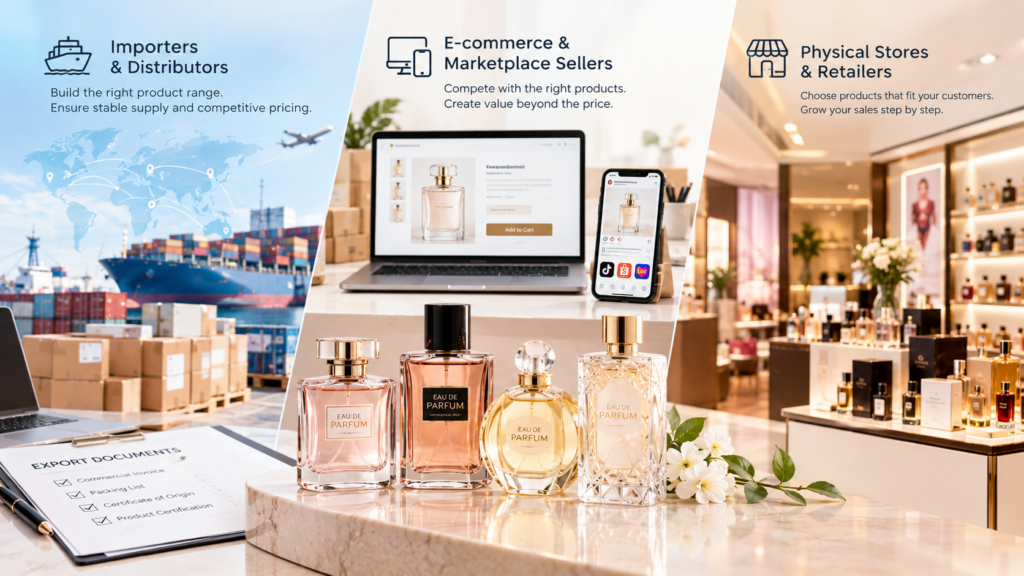
For Importers and Distributors
Importers need to evaluate products based on the needs of their target markets, while distributors must consider how easily they can supply retailers, dealers, and other sales channels within their networks.
Key factors to consider include:
- Fragrance range and target customers: Choose products that match local preferences and the market segments you want to serve.
- Wholesale and retail pricing: Compare the purchase price with the expected selling price in your target market.
- Supply reliability: Check whether the supplier can support repeat orders and maintain consistent product specifications.
- MOQ and payment terms: Make sure the order requirements fit your budget and distribution plan.
- Export documents and product compliance: Confirm that the necessary documents are available for your destination market.
Rather than choosing products based on low prices alone, build a product range that matches actual market demand and your distribution capabilities.
For E-commerce and Marketplace Sellers
Businesses selling perfumes on TikTok Shop, Shopee, Lazada, or their own websites must compete on price, product content, images, and the overall shopping experience.
Beyond the purchase price, online sellers should account for:
- Marketplace and payment processing fees.
- Advertising and customer acquisition costs.
- Packaging, delivery, and order fulfillment costs.
- Returns and other order-related expenses.
- Product photography, content creation, and inventory management.
A product with a low purchase price is not necessarily the best choice if its overall selling costs are high or it does not match customer demand. Prioritize products with clear specifications, suitable images for online listings, and a reliable supply source that can support your long-term business plans.
For Physical Perfume Stores and Retailers
For perfume shops, cosmetics stores, and retail chains, the product range should match the preferences of their regular customers and the positioning of their stores.
Start with a selection of suitable products, monitor actual sales performance, and increase order quantities as demand becomes clearer.
This approach can help retailers manage inventory more carefully while building a product range that fits their customers’ needs.
How to Calculate the Total Cost of Buying Perfumes in Bulk
To evaluate an order properly, businesses need to distinguish between the supplier’s price and the total cost of importing the products.
A useful starting point is to calculate the landed cost per bottle:
Landed cost per bottle = (FOB product cost + freight and insurance + import duties and VAT + customs clearance and inland transportation costs) ÷ total number of bottles
The actual costs depend on the shipping terms, destination market, and order structure.
For retailers, additional business expenses should also be included when estimating profit:
Estimated profit per product = Actual selling price received − Landed cost − Variable selling costs
Variable selling costs may include marketplace fees, payment processing fees, advertising costs allocated per order, packaging, and any delivery costs paid by the seller.
When comparing two suppliers, do not focus on the unit price alone. If one supplier offers a lower product price but has significantly higher shipping costs or a much larger MOQ, the total investment may be less attractive.
A useful quotation comparison should include the unit price, MOQ, product specifications, packaging, shipping terms, lead time, and any additional fees. This makes it easier to compare offers based on total cost and actual business needs.
MOQ: How Many Perfume Bottles Should You Order?
MOQ stands for Minimum Order Quantity. It is the smallest quantity a supplier accepts for an order. The MOQ may vary depending on the product, packaging design, and production requirements. For SCC’s existing perfume brands, the minimum order starts at 200 bottles, providing an entry point for businesses looking to test a market.
For importers and distributors, MOQ affects working capital, inventory allocation, and the ability to supply multiple retail locations. For online sellers and new stores, it also affects inventory risk when demand is still uncertain.
Order quantities should therefore be based on your budget, demand forecasts, storage capacity, and distribution plans. Avoid ordering more stock than you can reasonably sell simply to obtain a lower unit price.
A cautious approach is to select a few suitable product lines, monitor sales performance, and increase order quantities through repeat orders as demand grows.
Before placing an order with any supplier, clarify the following:
- Does the MOQ apply to each fragrance, each product, or the entire order?
- Can different product lines be combined in one order?
- Are samples available for evaluation before placing a bulk order?
- Does the MOQ differ between existing brands and Private Label products?
- Are the terms for repeat orders the same as those for the first order?
For SCC, detailed order conditions are confirmed in the quotation for each order.
How to Choose a Reliable Wholesale Perfume Supplier
A suitable supplier should meet your product requirements, have reliable supply capabilities, and offer clear and transparent business terms.
Verify Manufacturing Capabilities
If you want to buy directly from a perfume manufacturer, review its production facilities, industry experience, quality control processes, and product range.
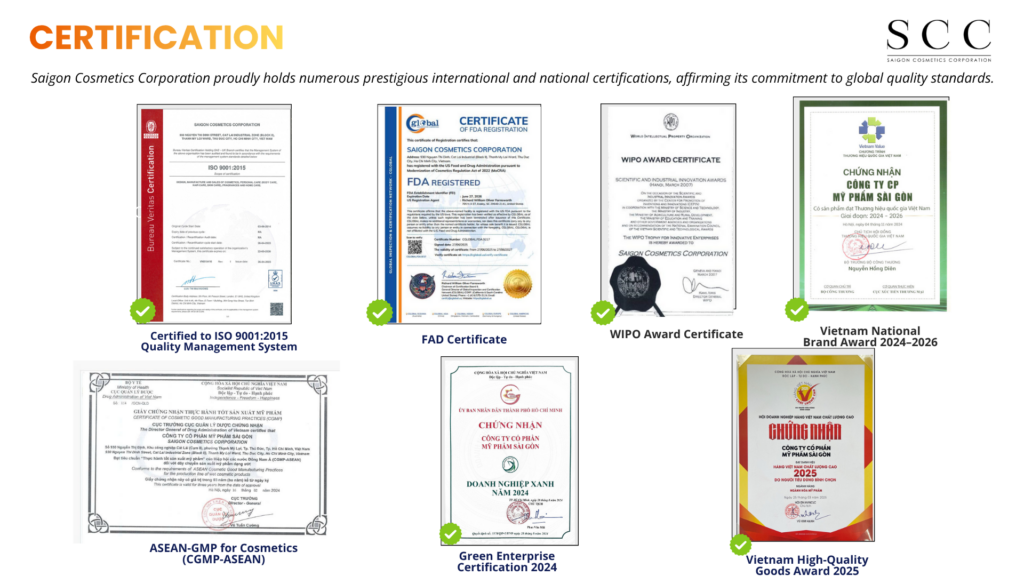
Certifications such as ISO 9001 and CGMP-ASEAN can provide useful information about a company’s quality management system and manufacturing practices. However, businesses should verify the scope and validity of the relevant certifications rather than relying on the certification name alone.
Evaluate Product Samples and Specifications
Before confirming a large order, request samples to evaluate the fragrance, packaging, and suitability for your business needs.
Agree on the evaluation criteria before moving into mass production. If the products must meet specific requirements in the destination market, confirm the necessary technical documents and product information with the supplier.
Assess Long-Term Supply Reliability
For distributors and retailers, maintaining a reliable supply is just as important as securing a competitive initial price.
Ask about production lead times, repeat-order planning, product consistency, and the supplier’s process for handling quality or delivery issues.
A dependable supply partner can help businesses plan inventory more effectively and maintain a consistent product range.
Check Export and Shipping Requirements
Perfumes may be subject to special shipping requirements depending on their ingredients, alcohol content, and transportation method.
Before shipment, confirm the applicable product classification, packaging requirements, and shipping documents.
Cosmetics may also be subject to product registration or notification, labeling, and documentation requirements in the destination market. These requirements, along with import duties and VAT, vary between the Philippines, Thailand, and other ASEAN countries.
Before finalizing your retail pricing, check the applicable requirements with a customs broker and the relevant authorities in your destination market.
Why Consider Existing Brands from a Manufacturer?
For importers, distributors, and marketplace sellers, choosing products from a manufacturer’s existing brand portfolio allows them to focus on product evaluation, target market selection, and distribution without having to manage the entire brand development process themselves.
Before importing, confirm distribution rights, commercial terms, MOQ, and any conditions regarding the use of product images or marketing materials.
This approach can be a practical option for businesses that want to expand their product range while building on an established product portfolio.
Why Consider a Perfume Manufacturer in Vietnam?
When looking for wholesale perfume suppliers, businesses can expand their search to manufacturers across Asia, including Vietnam.
The key is to evaluate each supplier based on its actual capabilities rather than assume that products from a particular country will always be cheaper or better in quality.
Important factors to consider include:
- Product range and manufacturing capabilities: Check whether the supplier can meet your product and volume requirements.
- Quality management: Review its quality control processes and relevant certifications.
- International business experience: Consider its experience working with overseas partners.
- Export support: Confirm its ability to prepare the required documents and coordinate export shipments.
- Product and packaging options: Understand the available choices and the flexibility offered for different business models.
For businesses seeking a long-term supply partner, working directly with a manufacturer can make it easier to discuss product specifications, order planning, and ongoing supply requirements.
Explore Wholesale Perfume Opportunities with SCC
Saigon Cosmetics Corporation (SCC) is a Vietnamese manufacturer of perfumes, personal care products, and home care products. SCC develops and supplies its own perfume brands while also offering OEM/ODM and Private Label solutions for business partners with suitable requirements.
Explore SCC’s Perfume Brands
SCC offers a range of perfume brands with different styles and market positioning, giving importers, distributors, and retailers more options when building their product portfolios.
Depending on the product line, business partners can discuss their target markets, fragrance selections, packaging requirements, and commercial needs to identify suitable products.
Manufacturing Capabilities and Quality Management
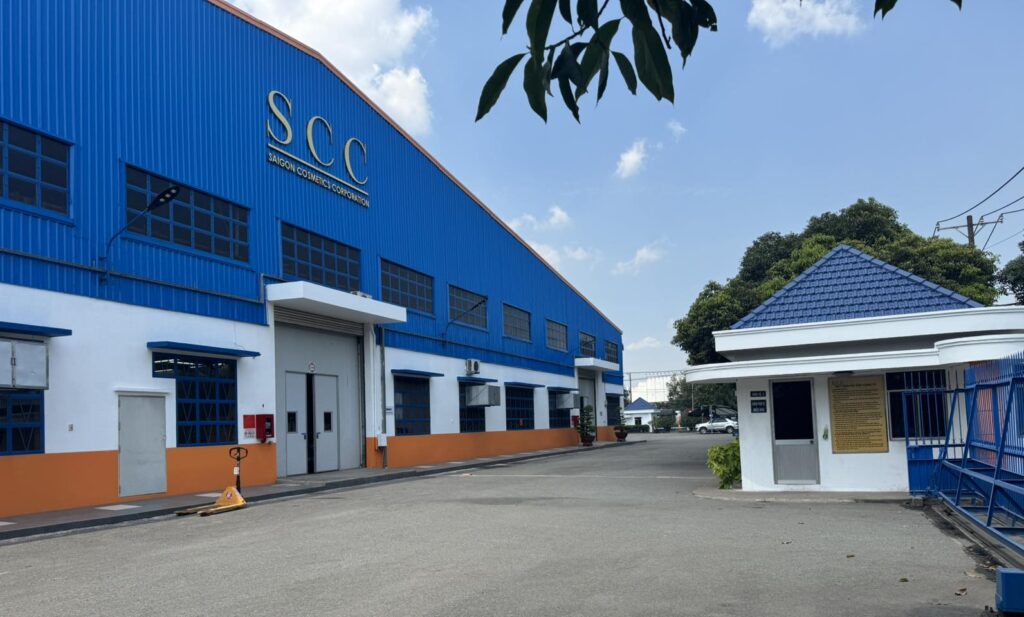
SCC operates a manufacturing facility covering approximately 17,000 m² in Cat Lai Industrial Park, Ho Chi Minh City, Vietnam. The company applies the ISO 9001:2015 quality management system and CGMP-ASEAN standards within the respective certification scopes. These are useful points for businesses to consider when evaluating SCC’s manufacturing capabilities and quality management systems.
B2B Solutions for Different Business Needs
SCC prioritizes its own brands while also considering OEM perfume and Private Label projects based on individual business requirements.
To help SCC better understand your needs, importers, distributors, and retailers are encouraged to provide the following information:
- Target market: The country or region where you plan to distribute the products.
- Product interests: The perfume brands or product categories you are interested in.
- Expected order quantity: Your estimated purchasing volume.
- Packaging requirements: Any preferences for bottles, packaging, or private branding.
- Preferred business model: Whether you are looking for existing brands or a suitable OEM/Private Label solution.
Providing these details helps SCC discuss product options, MOQ, and quotations that are more closely aligned with your business needs.
Contact SCC to explore its perfume portfolio and request a wholesale quotation.
Phone: +84 97 880 90 40
Email: export@saigoncosmetics.com
Website: www.scc-export.com