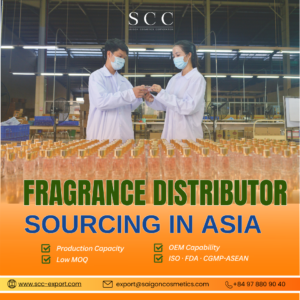
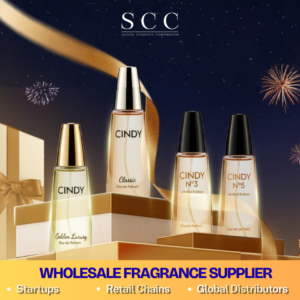
Choosing the right manufacturing and sourcing model is one of the most important decisions when entering the perfume business. Whether you are an importer, distributor, wholesaler, retailer, or entrepreneur planning to launch a fragrance brand, understanding the difference between OEM, ODM, Private Label, and OBM will help you choose the path that fits your resources, timeline, and market goals.
These four models represent very different business relationships — different levels of investment, different responsibilities, and different answers to one central question: who owns the brand, and who is responsible for developing the product?
For businesses looking to build their own brand, OEM, ODM, and Private Label may be attractive options. However, for fragrance distributor and importers looking for established brands that are ready to enter their markets, the OBM model offers a fundamentally different advantage.
This guide breaks down all four models, with a focus on the perfume industry, and explains why partnering with an OBM perfume manufacturer is worth serious consideration for distributors who would rather sell an existing brand than build a new one.
What Are OEM, ODM, Private Label, and OBM?
Before comparing the four models, it is important to understand what each one means.
OEM: Original Equipment Manufacturing
OEM stands for Original Equipment Manufacturing. Under an OEM model, the buyer generally provides the product specifications, formula, concept, or other requirements, while the manufacturer is responsible for producing the finished product according to those specifications.
For example, a perfume company may already have:
- A fragrance formula or fragrance concept
- Product specifications
- Bottle and packaging requirements
- Brand identity
- Target market requirements
The manufacturer then produces the perfume according to the agreed specifications. OEM is suitable for businesses that already have a clear product concept and want a manufacturing partner to produce it at scale.
ODM: Original Design Manufacturing
ODM stands for Original Design Manufacturing. Unlike traditional OEM, an ODM manufacturer contributes more significantly to product development. The manufacturer may provide support in areas such as:
- Product formulation
- Fragrance development
- Product design
- Packaging development
- Technical specifications
- R&D and testing
The buyer then sells the resulting product under their own brand. For perfume businesses, ODM can be useful when the buyer knows the type of fragrance or market positioning they want but does not have an in-house R&D or product development team.
ODM is suitable for businesses that want their own branded products but need greater support from the manufacturer during development.
Private Label Perfume
Private Label is another popular model in the beauty and fragrance industry. With Private Label, a manufacturer may offer an existing or semi-developed product that can be sold under the buyer’s own brand. Depending on the manufacturer, the buyer may be able to customize elements such as:
- Fragrance
- Formula
- Bottle
- Packaging
- Label
- Product size
- Brand identity
The exact level of customization depends on the manufacturer’s capabilities and project requirements. Private Label is often suitable for businesses that want to launch their own perfume brand without developing every part of the product from scratch.
OBM: Original Brand Manufacturing
Working with an OBM perfume manufacturer is different in one key way: the manufacturer owns the brand. Instead of producing a private-label product under the buyer’s name, the buyer partners with the manufacturer to import, distribute, wholesale, or retail an already-established brand.
In the perfume industry, this typically looks like:
Manufacturer-owned brand → Finished perfume products → Distributor/Importer → Local market → Consumers
A Vietnamese fragrance manufacturer, for example, may already have its own perfume brands, product lines, packaging, and market positioning fully developed. An international distributor then partners with that manufacturer to bring those existing brands into their local market — no brand-building required.

OEM vs ODM vs Private Label vs OBM: Key Differences
Although these four models are sometimes used interchangeably, they represent very different business relationships.
| Factor
|
OEM
|
ODM
|
Private Label
|
OBM
|
|---|---|---|---|---|
| Brand ownership
|
Buyer
|
Buyer
|
Buyer
|
Manufacturer
|
| Product development
|
Mainly buyer
|
Manufacturer + buyer
|
Mainly manufacturer
|
Manufacturer
|
| Formula/R&D
|
Buyer or agreed specification
|
Manufacturer-supported
|
Usually manufacturer
|
Manufacturer
|
| Packaging
|
Buyer-defined/custom
|
Customizable
|
Customizable
|
Existing brand packaging
|
| Customization
|
High
|
High
|
Medium–High
|
Limited
|
| Brand building
|
Buyer
|
Buyer
|
Buyer
|
Manufacturer
|
| Time to market
|
Medium
|
Medium
|
Faster
|
Fastest
|
| Product development burden
|
High
|
Medium
|
Low–Medium
|
Low
|
| Best for
|
Established brands
|
New product development
|
New brands
|
Distributors & importers
|
The biggest difference is who owns the brand and who carries the product development responsibility. With OEM, ODM, and Private Label, the buyer is usually building and developing their own brand. With OBM, the manufacturer already has the brand and product portfolio, allowing the buyer to focus on bringing those products to its target market.
Why Distributors and Importers Often Choose OBM
Building a perfume brand from zero takes more than producing a bottle of fragrance. It typically requires brand strategy, fragrance development, packaging design, consumer research, content creation, and enough marketing investment to earn recognition in a new market — all before the first real sale.
For a distributor entering a new market, taking on all of that adds significant time and cost. OBM offers a different starting point:
Instead of: Brand creation → Product development → Manufacturing → Marketing → Distribution
a distributor can start from: Established brand → Import → Local distribution → Marketing → Sales
This doesn’t remove all the work — local registration, pricing, channel development, and consumer education are still needed. But it removes the biggest and slowest part: creating the brand and product portfolio itself. That lets distributors focus on what they already do best — building distribution and reaching customers.
Faster market entry. Because the brand and products already exist, distributors can move to market meaningfully faster than building a new fragrance brand from scratch.
Lower product development burden. The manufacturer owns the brand, formulation, and product roadmap, freeing the distributor’s resources for commercial activity instead of R&D.
An established product portfolio from day one. A mature brand typically already spans multiple fragrances, formats, and price points — giving distributors more to work with for a broader market launch.
A clear focus on distribution. Rather than becoming a product developer, the buyer can put full attention into retail distribution, wholesale networks, e-commerce channels, local partnerships, and sales teams — the parts of the business that actually drive revenue.
Which Model Should You Choose?
Choose OEM if: you already own a perfume brand, have a specific formula or specification, and need a manufacturing partner with a high degree of product control.
Choose ODM if: you’re building your own brand but need the manufacturer’s support with fragrance formulation, product development, or R&D.
Choose Private Label if: you want to launch your own brand relatively quickly, working from existing product concepts rather than developing everything from scratch.
Choose OBM if: you’re an importer or distributor who already has (or is building) market access, and you’d rather bring an established, ready-made perfume brand to your customers than spend the time and capital building one yourself.
For many international perfume distributors, working with an OBM perfume manufacturer is the most practical route — it pairs an already-developed product portfolio with the distributor’s own market knowledge and channels, without the upfront cost of building a brand.
Why Partner with a Vietnamese OBM Perfume Manufacturer?
Vietnam has a growing beauty and perfume manufacturer industry, supported by local manufacturing capabilities, regional supply chains, and increasing export activity. For international buyers, working with a Vietnamese perfume company can provide an opportunity to access Vietnamese fragrance brands and products while developing distribution opportunities in their own markets.
This is where SCC takes a different approach.
SCC: Established Vietnamese Perfume Brands for International Markets
For international distributors and importers, the OBM model offers an opportunity to work with a manufacturer that already has its own brands, products, manufacturing infrastructure, and distribution experience.
Saigon Cosmetics Corporation (SCC) is one of Vietnam’s established cosmetics manufacturers, with a history dating back to before 1975 and more than 50 years of experience in the beauty and fragrance industry. Formerly known as Imortel Perfumes, SCC has developed from a Vietnamese perfume manufacturer into a company with its own fragrance and beauty brands, manufacturing capabilities, and distribution network.
For distributors, this means they do not have to start by creating a perfume brand from zero. Instead, they can explore SCC’s existing brand and product portfolio and focus on introducing suitable products to their target markets.
Established Brands Across Different Market Segments
SCC has developed a diverse portfolio of fragrance and beauty products covering different consumer segments, from high-class to mass-market products. Its product categories include Perfume, Body Care, Hair Care, and Home Care.
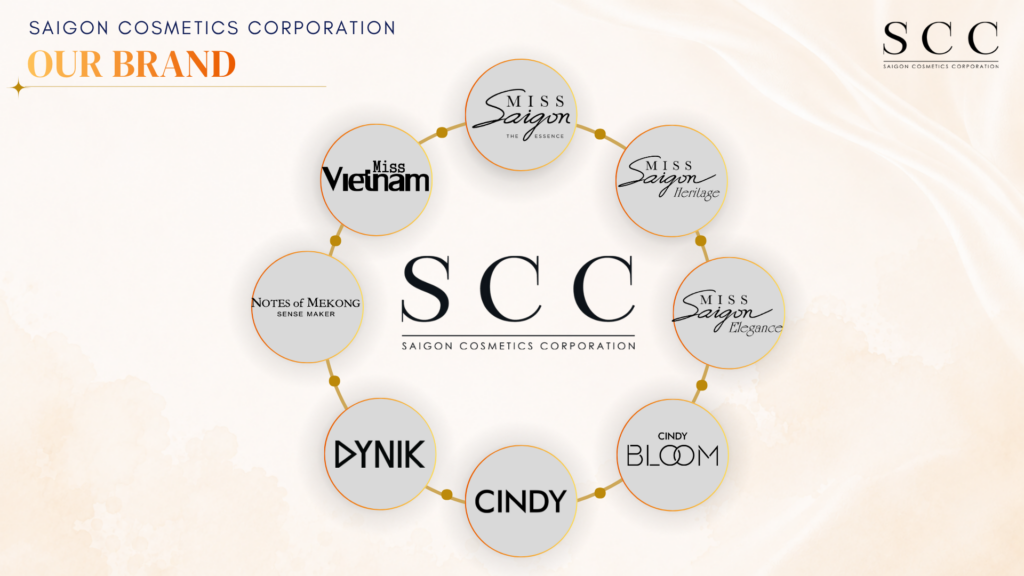
The fragrance portfolio includes established Vietnamese brands and collections such as:
- Miss Saigon
- Miss Vietnam
- Notes Of Mekong
- Dynik
- Aromalink
- Cindy Bloom
- Cindy
- Saigon
- Other fragrance collections across different product formats and market segments
This portfolio gives international distributors an opportunity to select products according to their target customers, price positioning, and market strategy.
Integrated Manufacturing Infrastructure
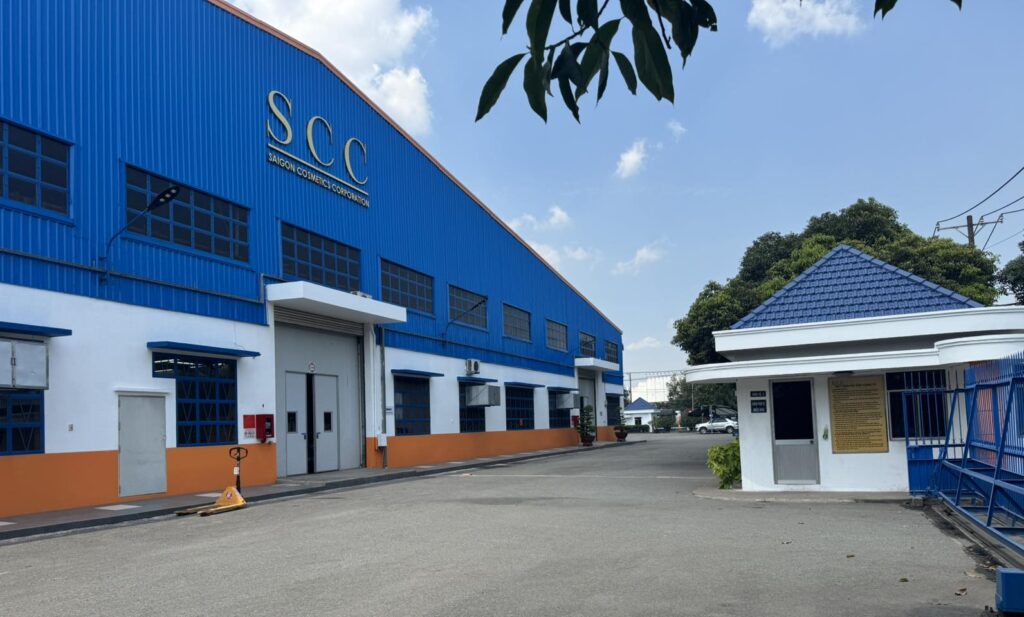
SCC operates a 17,000 m² facility in Cat Lai Industrial Park, Ho Chi Minh City, including approximately 6,000 m² of production space, with a workforce of more than 500 employees. The company manufactures products across perfume, personal care and home care categories.
For an OBM partner, this manufacturing foundation is important because the brand owner and manufacturer are part of the same organization. This supports greater control over production, quality, and supply compared with sourcing an established brand from a company that relies entirely on third-party manufacturing.
Fragrance Expertise and Product Development
Fragrance remains one of SCC’s core areas of expertise. The company’s history and development are closely connected with the perfume industry, and SCC identifies itself today as a pioneer and leader in Vietnam’s perfume industry.
SCC’s production process includes strict quality control from raw materials through closed-loop production and packaging. Products undergo step-by-step testing covering areas such as formulation, safety, and fragrance before reaching customers. The company also emphasizes R&D and continuous product innovation.
For international distributors, this combination of brand ownership, fragrance expertise, product development, and manufacturing provides a strong foundation for long-term brand distribution.
Proven Distribution Capability in Vietnam
SCC also brings extensive experience in building and managing distribution channels.
According to its company profile, SCC has more than 26,429 active points of sale nationwide, including general trade, modern trade, traditional retail, key accounts, and SCC premium showrooms. Its distribution network also includes supermarkets and major retail chains, e-commerce platforms, and premium retail channels.
This experience is particularly relevant to international distributors because SCC understands the commercial side of taking beauty and fragrance products from manufacturing into real retail and consumer markets.
International Market Experience
SCC’s products are not limited to the Vietnamese market. The company profile states that SCC products are sold in international markets, with millions of products exported annually.
For an international distributor, this means partnering with a company that already has experience preparing and supplying products for export markets rather than working exclusively within the domestic market.
Quality Standards and Certifications
Quality and compliance are important considerations when selecting a perfume brand or manufacturing partner for international distribution.
SCC’s company profile highlights certifications and recognitions including:
- ISO 9001:2015 Quality Management System
- CGMP–ASEAN Certification
- FDA Certification
- Green Enterprise Certification
- Vietnam National Brand Award 2024–2026
- Vietnam High-Quality Goods Award 2025
These certifications and recognitions provide international partners with additional confidence when evaluating SCC as a Vietnamese beauty and fragrance partner.
Why International Distributors Choose the OBM Model with SCC
For a distributor, the value of an OBM partnership is not simply access to finished perfume products. It is the ability to combine an established brand portfolio with the distributor’s own market knowledge and distribution capabilities.
With SCC, the partnership can be viewed as:
SCC: Brand ownership + Product development + Manufacturing + Quality control + Export supply
Distributor: Market knowledge + Importation + Distribution + Local marketing + Sales
This allows both sides to focus on their respective strengths.
Instead of spending significant resources developing a new fragrance brand, a distributor can evaluate SCC’s existing portfolio and identify brands or products that fit its market.
A Practical Route to Market Entry
For distributors entering a new fragrance market, the traditional route may involve:
Brand creation → Product development → Packaging → Manufacturing → Market launch → Distribution
An OBM partnership can simplify this process:
Established SCC brand → Product selection → Import → Local distribution → Marketing → Sales
This does not eliminate the work required to build a successful market. Local registration, pricing, marketing, channel development, and consumer education may still be necessary. However, the distributor does not need to begin with the creation of the brand and its entire product portfolio.
Built for Long-Term Distribution Partnerships
SCC’s combination of more than 50 years of industry experience, established fragrance brands, manufacturing infrastructure, domestic distribution experience, export capabilities, and quality certifications provides a foundation for international brand partnerships.
For importers, distributors, wholesalers, and retail partners looking for established Vietnamese perfume brands — rather than the cost and time of developing one from scratch — SCC, an OBM perfume manufacturer built around exactly that model, lets partners focus on what matters most in their markets: building distribution, reaching consumers, and growing sales.
Looking for an OBM perfume manufacturer with established Vietnamese brands to distribute in your market?
Explore SCC’s fragrance portfolio and contact the SCC Export team to discuss suitable brands, products, and distribution opportunities for your market.
Contact SCC’s export team:
Phone: +84 97 880 90 40
Email: export@saigoncosmetics.com
Website: www.scc-export.com
Reach out today to receive the catalog and pricing for your market.