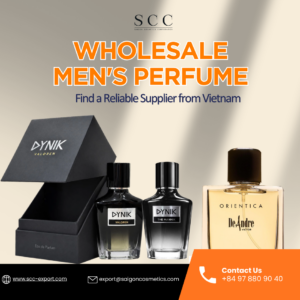
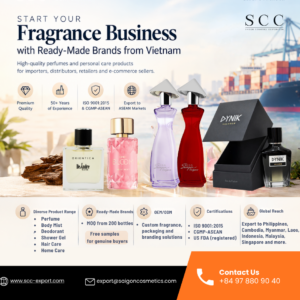
If you’re a distributor, retailer, or emerging brand owner exploring private label wholesale perfume, one of the first decisions you’ll face is where to manufacture. Buyers across the Philippines, Thailand, and the wider Southeast Asian region are increasingly looking beyond Korea and China toward Vietnam — and for good reason. This article walks through what private label wholesale perfume actually involves, step by step, and why a facility like Saigon Cosmetics Corporation (SCC) is built to support it.
What Private Label Wholesale Perfume Actually Means
Private label wholesale perfume is different from simply buying stock fragrance in bulk. Instead of reselling an existing brand, the buyer commissions a manufacturer to produce fragrance under the buyer’s own brand name, packaging, and scent direction — while the manufacturer handles formulation, filling, and production.
This model appeals to three types of buyers in particular:
- Distributors who want a house brand to sell alongside the third-party lines they already carry, improving margins.
- Retail chains — pharmacies, supermarkets, gift shops — that want an exclusive fragrance line not available from competitors.
- E-commerce sellers and emerging brand founders who want to launch a fragrance brand without building their own factory.
What all three have in common is a need for a manufacturing partner that can handle everything from scent sourcing to export documentation, without the buyer needing in-house production expertise.
What Building a Fragrance Brand Actually Requires
Manufacturing is only one half of building your own brand — the other half happens before a single bottle goes into production. Buyers who skip this step often end up with a well-made product that doesn’t actually stand out on the shelf.
A few decisions typically need to be settled first:
- Positioning. Is the brand competing on price (mass retail), on scent quality and story (mid-tier), or on exclusivity and design (premium/niche)? This decision shapes everything downstream — which fragrance houses’ oils to draw from, what bottle and box quality to specify, and what price point to set.
- Target customer. A brand built for a supermarket shelf in the Philippines needs a different scent profile, price point, and packaging language than one built for a boutique gifting retailer.
- Brand story and identity. What does the name, bottle design, and packaging communicate? SCC’s own brands illustrate different answers to this — Miss Saigon leans into national heritage and craftsmanship through its áo dài and nón lá-inspired design, while Cindy Bloom leans into a younger, trend-driven identity. A private label buyer doesn’t need to copy either approach, but should have an equally clear point of view before development starts.
- Go-to-market plan. Where will the brand actually be sold — modern trade, e-commerce, direct distribution — and does the packaging and format match that channel?
These decisions don’t need to be finalized alone. Because SCC develops and manages its own brand portfolio in-house, its team is positioned to advise on packaging design, format selection, and positioning based on what has and hasn’t worked across its own product lines — not just execute a spec handed over by the buyer.
Why Buyers Are Looking to Vietnam for Private Label Perfume
Sourcing private label perfume isn’t just about finding a factory that can fill a bottle. Buyers need a manufacturer with the formulation know-how, production capacity, and export experience to turn a brand concept into a finished, market-ready product — reliably, and at a workable minimum order quantity.
Vietnam has become a practical alternative for regional buyers for a few concrete reasons:
- ATIGA tariff advantage. Under the ASEAN Trade in Goods Agreement, perfume manufactured in Vietnam can enter markets like the Philippines and Thailand at 0% tariff, a cost advantage that Korean and Chinese-manufactured products typically don’t carry.
- Established production infrastructure. Vietnam’s cosmetics manufacturing sector has decades of formulation and export experience, not a recently built-up capacity.
- Proximity and logistics. Shipping times and freight costs to Southeast Asian markets are shorter than sourcing from Northeast Asia.
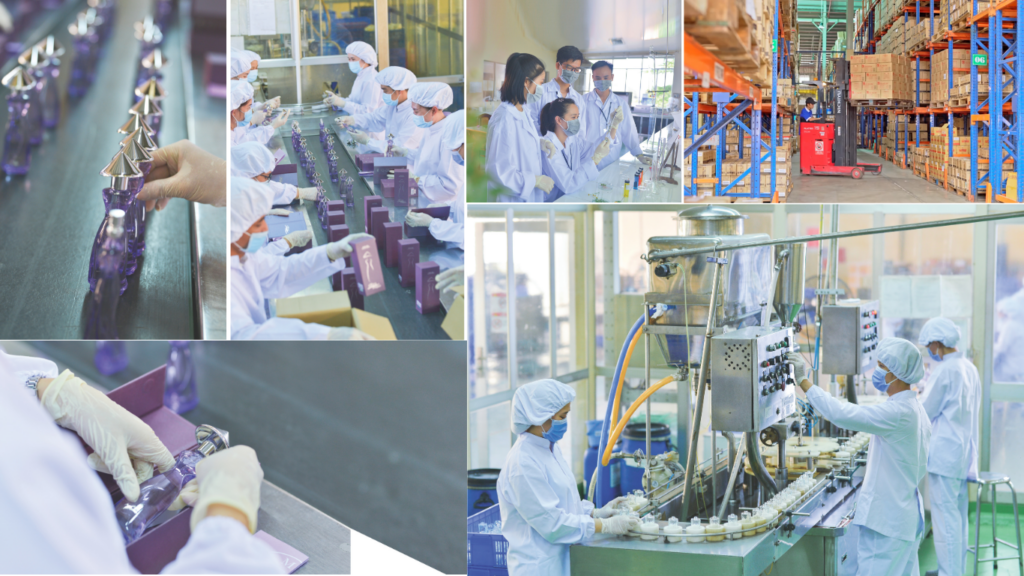
SCC’s perfume manufacturer in Vietnam operates from a 17,000 m² facility in Cat Lai Industrial Park, Ho Chi Minh City, with roughly 6,000 m² dedicated to production, and a workforce of around 500 people. On the fragrance line specifically, the facility runs a monthly perfume production capacity of 400,000 bottles — enough headroom to take on new private label programs without disrupting existing brand production.
How Private Label Wholesale Perfume Works at SCC, Step by Step
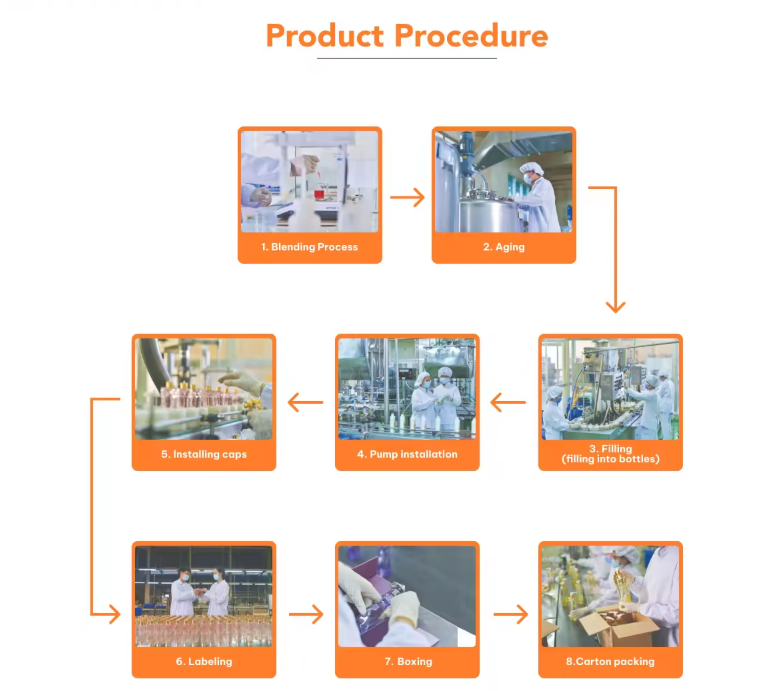
Buyers new to private label sourcing often aren’t sure what the process actually involves beyond “place an order.” In practice, it runs through a few distinct stages:
1. Brief and scent direction. The buyer shares target market, price point, and general scent preference (fresh, floral, oriental, woody, and so on). This shapes which fragrance direction the manufacturer proposes first.
2. Formulation and sampling. SCC works from fragrance oils sourced through confirmed partnerships with international fragrance houses Robertet, Firmenich, and Givaudan — the same houses that supply scent components to established global fragrance brands. Sample formulations are prepared for the buyer to evaluate and refine before committing to a production run.
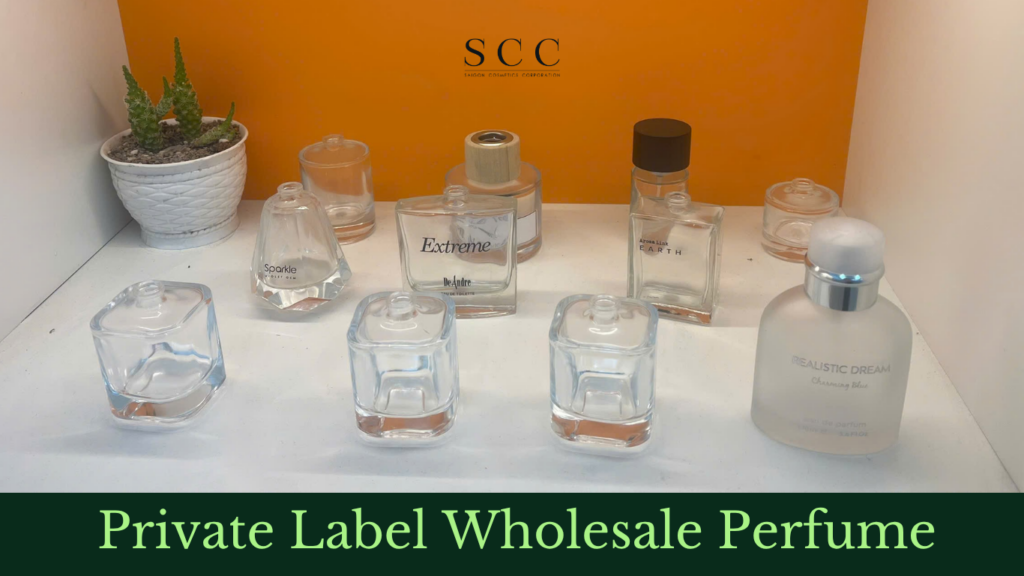
3. Packaging and format selection. Fragrance formats available for private label and OEM programs include 8ml, 20ml, 30ml, 50ml, and 100ml, giving buyers flexibility depending on whether they’re targeting travel-size retail, gifting, or standard retail formats. Bottle design, cap finish, and box artwork are developed around the buyer’s brand identity.
4. Minimum order quantity and production run. A straightforward private label wholesale perfume order at SCC typically starts at a minimum order quantity of around 1,000 units — accessible enough for a distributor or retailer testing a new line, without the risk of committing to an unrealistic volume upfront.
5. Quality control and export documentation. Finished batches go through the same quality system used across SCC’s own branded production, and the export team prepares the documentation needed for customs clearance in the buyer’s destination market.
Because all five stages happen under one manufacturer, buyers avoid the common private label pitfall of coordinating separately with a formulator, a bottler, and a packaging supplier.
A Manufacturer with a Proven Brand Track Record
One thing worth checking before committing to a private label wholesale perfume partner is whether they’ve actually built and sustained brands of their own — not just filled orders for other companies. It’s a reasonable proxy for whether the manufacturer understands branding, packaging, and market positioning, not just production.
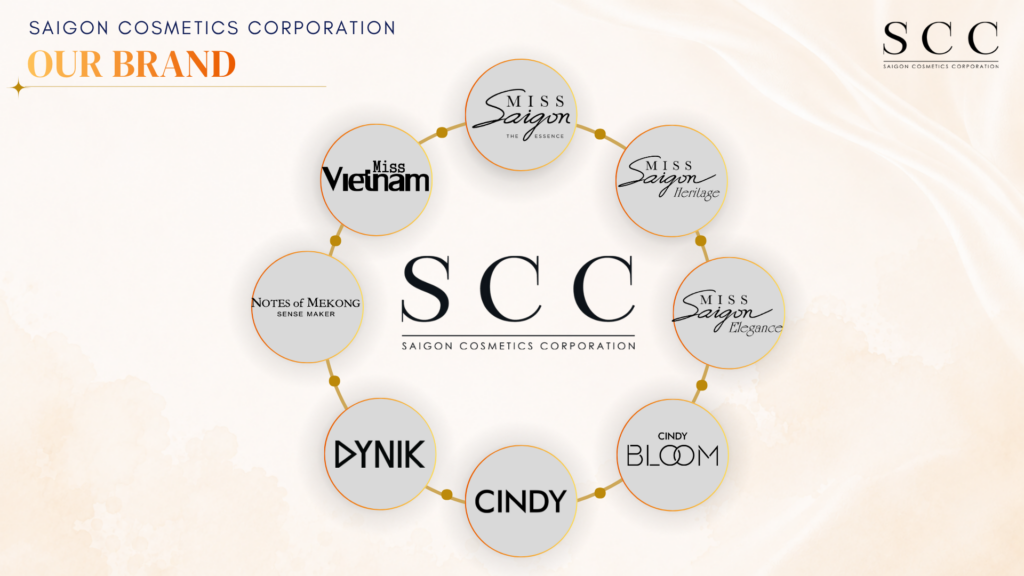
SCC’s own portfolio gives some indication here. Miss Saigon, one of SCC’s flagship fragrance brands, was recognized under the Vietnam National Brand program for 2024–2026 and is built around distinctive packaging inspired by the “áo dài” and “nón lá”, spanning three collections — Elegance, Heritage, and The Essence. Beyond Miss Saigon, SCC’s portfolio includes Cindy Bloom and Cindy for the mass and youth fragrance segments, Notes of Mekong and Dynik for men’s grooming — brands distributed through more than 26,000 active points of sale, including modern trade retailers such as AEON, LOTTE Mart, and Guardian.
For a private label buyer, this track record signals a manufacturer that understands how a fragrance brand needs to look, smell, and perform to hold shelf space in a competitive market — not just how to fill a bottle to spec.
Quality and Compliance Buyers Can Verify
Private label sourcing decisions usually come with some degree of risk, particularly for buyers who haven’t visited the factory in person. Third-party certifications help close that gap. SCC holds ISO 9001:2015 certification audited by Bureau Veritas, US FDA registration, and CGMP-ASEAN compliance for cosmetics manufacturing — all independently verifiable, not self-issued claims.
SCC has also worked as an OEM perfume and private label partner for a range of established brands and retailers, including Pharmacity, Jollibee, LOTTE Mart, GO!, CoopMart, LG Vina Cosmetics, and MiniSo, among others. This kind of client list reflects a manufacturer accustomed to meeting the compliance and quality expectations of established retail and pharmacy chains — a relevant reference point for a buyer bringing their own brand into a similarly regulated retail environment.
Getting Started
Private label wholesale perfume works best when the manufacturer and buyer align early on scent direction, format, volume, and timeline. If you’re evaluating Vietnam as a sourcing base, it’s worth having a direct conversation about your target market, expected volumes, and brand positioning before finalizing a partner.
SCC’s export team can be reached at export@saigoncosmetics.com or +84 97 880 90 40, or through www.scc-export.com, to discuss private label wholesale perfume programs for the Philippine, Thai, and broader Southeast Asian markets.