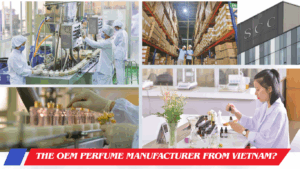
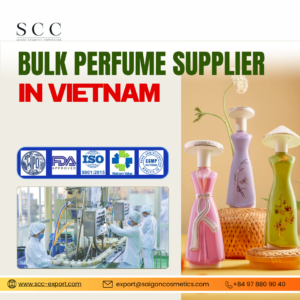
If you’re buying wholesale perfume Asia for a distribution business in the Philippines, Thailand, or anywhere else in Southeast Asia, you’ve probably already looked outside your own country. Asia has several well-known perfume manufacturing hubs — China, South Korea, Thailand, and Vietnam all show up when you search for suppliers — and each one gets pitched to you in a different way. The problem is that most of what you find online is either a plain directory listing with no real detail, or one supplier telling you why they’re the best choice.
This article won’t tell you which country is “best,” because that depends on what your business actually needs. Instead, it walks through the things experienced B2B buyers check before they commit to a supplier — things that matter more than a low price once you’re a few months into working together.
Price Is the Easy Comparison. It’s Not the Useful One.
Almost every perfume manufacturer in Asia can give you a good price on a basic EDP formula. That’s not what makes a partnership succeed or fail. What actually decides whether a supplier relationship works over time comes down to a few things that are harder to see at first glance:
- Where the fragrance oils and raw materials really come from
- Whether the manufacturer’s certifications are checked by an outside party, or just self-claimed
- What you actually pay after import duties, not just the factory price
- Whether production stays reliable once you move from a small trial order to a regular, larger one
- Whether the supplier replies quickly, or takes days to respond because of time zone gaps
Each of these deserves a closer look, because they’re usually the problems that show up only after a buyer has already placed a first order — by which point it’s too late to negotiate.
Ask Where the Fragrance Actually Comes From
A finished perfume is only as good as the fragrance oil inside it, and that quality can vary a lot between suppliers — even suppliers in the same country. Some manufacturers make their own fragrance blends using basic aroma chemicals. Others buy fragrance compounds from established fragrance houses that run their own quality checks.
This is a fair question to ask any manufacturer, no matter where they’re based: who supplies your fragrance oils, and can you name them? Saigon Cosmetics Corporation (SCC) sources its fragrance oils through confirmed partnerships with Robertet, Firmenich, and Givaudan — three internationally known fragrance houses. It’s worth confirming a detail like this with any supplier you’re comparing, rather than just taking their word for it.
Certifications: Checked by Someone Else, or Just Self-Claimed?
The word “certified” gets used loosely in B2B sourcing. A certification only really means something if it was issued or checked by an independent organization — not just printed on a company’s own product sheet.
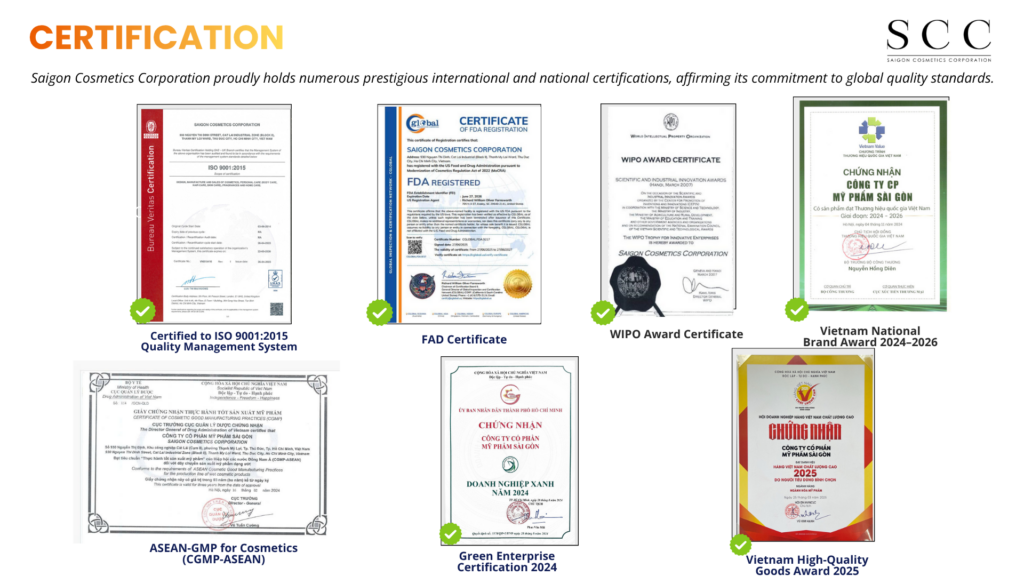
When you’re comparing perfume manufacturers in Vietnam, China, Korea, or Thailand, ask specifically which certifications were checked by an outside party. SCC holds ISO 9001:2015 certification, audited by Bureau Veritas, along with US FDA registration and CGMP-ASEAN compliance for cosmetic manufacturing. These aren’t just marketing claims — they’re documents you can ask to see and verify before you sign anything.
Import Duties: The Number That Actually Affects Your Margin
The factory price on a quote is rarely the number that decides your real cost. What you pay after import duties, once the product clears customs in your own country, is what actually affects your margin.
This is where trade agreements matter, and it’s worth understanding rather than skipping over. Vietnam, the Philippines, and Thailand are all members of ASEAN, so goods made in Vietnam and exported under the ASEAN Trade in Goods Agreement (ATIGA) can qualify for 0% import duty into any other ASEAN country, as long as the product meets the agreement’s rules. China and South Korea also have their own trade agreements with ASEAN (called ACFTA and AKFTA), which can lower duties on certain goods too. So this isn’t an advantage that belongs to one country alone — it depends on the specific trade agreement, the product’s HS code, and whether the manufacturer can give you the right certificate of origin.
The practical takeaway: don’t just take a supplier’s word for what duty rate applies. Ask for the HS code they’d use for your shipment, and confirm the rate yourself, or have your customs broker confirm it. A supplier who can produce a certificate of origin without hesitation is usually one who exports regularly and knows the paperwork — and that alone tells you something about how experienced they are.
Can They Handle More Than a Small Trial Order?
Many manufacturers can handle a small trial order without any trouble. The real test is whether they can keep quality and delivery times steady once you move to a bigger, recurring order. This is hard to judge from a distance, but a few questions help:
- What is their stated monthly production capacity, and does it match the size of their factory?
- Do they make products for other B2B or OEM clients you could ask about, even casually?
- Is their factory big enough to run several product lines at once, without one order slowing down another?
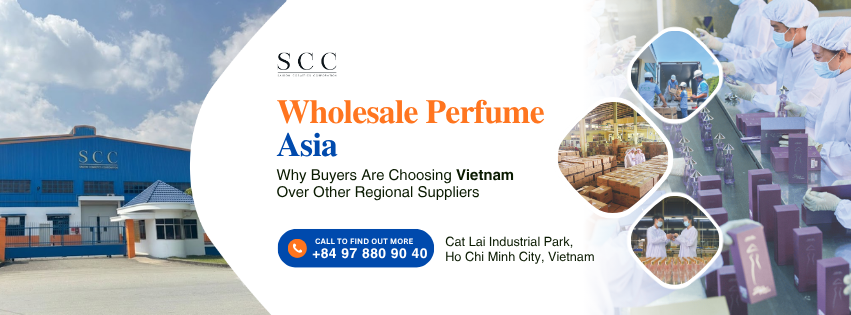
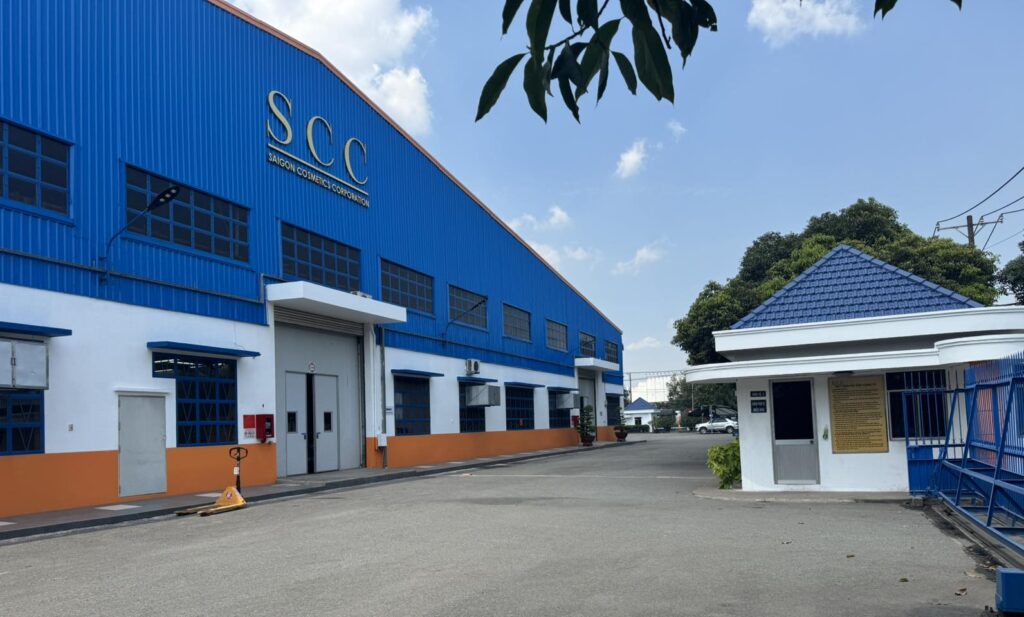
SCC runs a 17,000m² facility in Ho Chi Minh City, with about 6,000m² used for production, and a stated monthly capacity of 400,000 perfume bottles. Manufacturers who are open about numbers like this — instead of staying vague — are usually easier to plan a supply chain around.
Time Zones Matter More Than Buyers Expect
This is easy to overlook until it becomes a real problem. Vietnam is in the same time zone as Thailand, and only one hour behind the Philippines, so back-and-forth conversations about formula approvals, artwork changes, or shipping questions can realistically happen during a normal workday across the region. Working with manufacturers in places with a bigger time difference usually means slower back-and-forth, simply because both sides aren’t awake and working at the same time.
Comparing Wholesale Perfume Asia
None of this means every Vietnamese manufacturer is automatically the right fit, or that manufacturers elsewhere in Asia can’t meet the same standards. The point is that “wholesale perfume Asia” is too broad a category to judge on price alone. The suppliers worth shortlisting are the ones who can answer a few specific questions clearly: where their fragrance oils come from, which certifications were checked by an outside party, what you’ll actually pay after duties, and how their production holds up once an order gets bigger.
SCC can answer all four of these directly — it sources fragrance oils through Robertet, Firmenich, and Givaudan; holds ISO 9001:2015 (audited by Bureau Veritas), US FDA registration, and CGMP-ASEAN certification; exports under ATIGA with Vietnam-origin certificates; and runs a facility with a monthly capacity of 400,000 perfume bottles. SCC’s own fragrance line, Miss Saigon, is also recognized under Vietnam’s National Brand program for 2024–2026, reflecting the same manufacturing standards used across its OEM and private label work.
If you’re building a shortlist for wholesale perfume in Asia, these are the questions worth asking before you request a quote — not after you’ve already placed one.
Contact SCC Export
Saigon Cosmetics Corporation Cat Lai Industrial Park, Ho Chi Minh City, Vietnam
Phone: +84 97 880 90 40
Email: export@saigoncosmetics.com
Website: www.scc-export.com