When businesses start looking for a perfume manufacturer, they often focus on three things: Does the fragrance smell right? Does the packaging look good? And is the price competitive?
These are important questions because they are directly related to what customers will see and experience. However, a successful manufacturing partnership involves much more than the first product sample. For importers, distributors, retailers, and brand owners, choosing the right manufacturing partner can affect the business for many years, not just one order.
A manufacturer may have an attractive catalog, interesting fragrances, and a good price. But before signing a contract, businesses should also look at production capacity, quality control, communication, MOQ, export documents, production lead time, and long-term support. Any weakness in these areas can create problems with inventory, product launches, or brand reputation.
That is why it is important to evaluate a perfume manufacturer carefully before signing a contract. This guide explains the key factors businesses should check when choosing a manufacturing partner.
Why Is It Important to Evaluate a Perfume Manufacturer?
A perfume manufacturer is not simply a company that makes products. It can become an important part of your supply chain. The manufacturer’s ability to maintain consistent quality, meet production schedules, provide the required documents, and respond to new market requirements can directly affect your inventory, distribution plans, and marketing activities.
For example, a small delay in production can lead to a delayed product launch in your market.
A careful evaluation before signing a contract can help businesses:
- Understand the manufacturer’s actual production capabilities
- Check whether the product quality matches expectations
- Identify possible communication or operational problems early
- Compare MOQ and commercial conditions
- Clearly define each party’s responsibilities
- Reduce misunderstandings during production
- Set clear expectations for future orders
Here are 8 important factors to consider when you evaluate a perfume manufacturer.
Evaluate the Manufacturer’s Production Capabilities
The first step is to understand whether the manufacturer’s production capabilities match your business needs.
This does not always mean that a bigger factory is better. The right manufacturer is one whose production capacity and operating model fit your current project.
Some useful questions to ask include:
- What types of fragrance products does the manufacturer produce?
- What product formats are available?
- What is the production capacity per month?
- Are all production processes handled in-house, or are some outsourced?
- Can the manufacturer support customized bottles, caps, boxes, or other packaging?
- Does the manufacturer offer OEM, ODM, Private Label, or other cooperation models?
- Can the factory support your expected order volume?
Business needs can be very different.
For example, a company testing a new product in a new market may start with a few thousand units. A large distributor may need tens of thousands of units every quarter. A very large factory may not be focused on small trial orders, while a smaller factory may have difficulty supporting rapid growth.
Therefore, when you evaluate a perfume manufacturer, the goal is not simply to find the biggest factory. The goal is to find a manufacturer whose capacity matches your current needs and future plans.
Check Quality Management and Manufacturing Standards
Quality is one of the most important factors to consider when choosing a perfume manufacturer. Before signing a contract, businesses should understand how the manufacturer manages quality throughout the production process.
You can ask about:
- Manufacturing certifications such as ISO or GMP
- Quality management systems
- Product testing before shipment
- Incoming raw material inspection
- Finished product inspection
- Batch-to-batch consistency
- Stability or compatibility testing when required
- Quality control records
One important point is not only to ask “What certifications do you have?”
It is also useful to ask: “How are these standards applied in daily production?”
For example, quality control should ideally take place at different stages — from raw materials and production to packaging and finished products. This helps identify potential problems earlier instead of waiting until the final inspection. Therefore, when you evaluate a perfume manufacturer, look beyond the certification listed on the website. Try to understand how the quality system actually works in production.
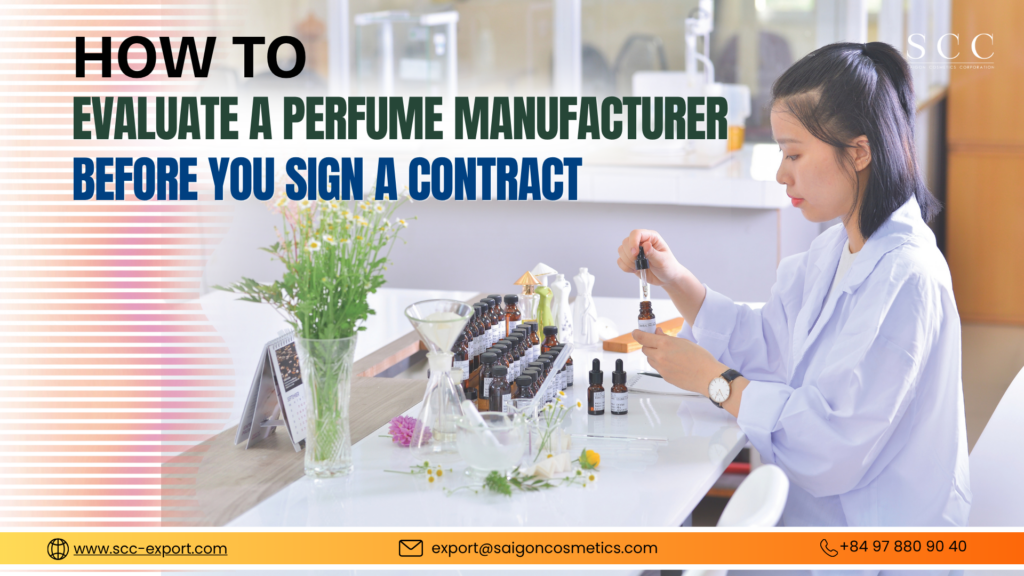
Request Samples Before Placing a Commercial Order
A product sample gives you an opportunity to evaluate the actual product instead of relying only on a catalog or product description. Before committing to a large commercial order, businesses should carefully review the samples.
Depending on the project, you may evaluate:
Fragrance
Check the fragrance at different stages, including the opening, middle, and dry-down. Consider the fragrance strength, development over time, and whether it fits the preferences of your target market.
Packaging
Check the bottle, cap, spray pump, label, and box. Make sure the spray works properly and the packaging does not leak or become damaged easily.
Product Quality
Look at the product appearance, color, clarity, consistency, packaging condition, and other relevant specifications.
Market Fit
Ask whether the product matches your target customers, expected price range, brand positioning, and sales channels. For OEM and Private Label projects, sample evaluation is even more important.
The sample stage allows both sides to agree on product expectations before moving to large-scale production. A small issue that is not identified during sampling may become a much larger issue when thousands of units are produced.
Understand MOQ and Pricing Structure
MOQ (Minimum Order Quantity) is another important factor when you evaluate a perfume manufacturer. A low unit price may look attractive, but it may not be practical if the required MOQ is higher than your current sales plan or budget.
Before signing a contract, clarify:
- MOQ for each product
- MOQ for each fragrance
- MOQ for customized packaging
- Sample costs and conditions
- Price changes based on order volume
- Packaging costs
- Product or packaging development costs
- Mold or design costs, if applicable
- Local transportation costs
- Payment terms and deposit requirements
It is also useful to ask: “How does the price change when the order quantity increases?”
Some manufacturers may offer different prices for trial orders, medium-sized orders, and larger orders. Understanding the full cost structure can help you plan your business more accurately instead of looking only at the initial price per piece.
Evaluate Customization and Product Development Support
If you are building your own perfume brand, the manufacturer’s R&D and customization capabilities can have a major impact on the final product.
Before choosing a partner, ask whether they can support:
- Fragrance development based on your requirements
- Formula adjustments
- Bottle selection
- Packaging development
- Packaging materials
- Artwork and design file preparation
- Product specifications
- Private Label products
- OEM/ODM product development
Different manufacturers offer different levels of support.
Some may only provide existing fragrances and packaging options. Others may support customers from the early product concept to the final product.
If your project requires a specific fragrance direction, packaging style, or product positioning, it is better to discuss these requirements at the beginning.
Clear communication during product development can help reduce unnecessary changes, time, and cost later.
Evaluate Communication and Response Time
Communication is sometimes overlooked when businesses evaluate a perfume manufacturer.
However, good communication can make a significant difference during product development and production.
During the quotation and sampling stage, pay attention to whether the manufacturer:
- Answers questions clearly
- Provides specific information
- Understands your requirements correctly
- Asks questions when information is unclear
- Communicates changes in price, materials, or timelines
- Clearly explains limitations or conditions
- Provides regular project updates
International manufacturing projects can involve many stages, including sampling, testing, production, quality control, packaging, and export.
A manufacturer that communicates clearly can help both sides identify problems earlier and avoid misunderstandings later.
Check Export Experience and Required Documents
If you plan to import perfume from another country, it is important to evaluate not only the manufacturer’s production capabilities but also its export experience.
Ask whether the manufacturer has experience working with international customers and what export support they can provide.
Depending on the destination market and shipment, documents may include:
- Commercial Invoice
- Packing List
- Certificate of Origin
- Product-related documents
- Safety or product information
- Shipping documents
- Other documents required by the destination market
Import requirements can vary between countries.
Some markets may require additional product registration, safety documents, or other regulatory documents before the products can be sold.
For this reason, it is better to discuss documentation requirements with the manufacturer at the beginning of the project.
This can help avoid missing documents close to the shipment date.
Understand the Production Lead Time
A manufacturer may offer a suitable product and competitive price, but the production schedule also needs to match your business plan.
For international orders, a production delay can affect shipping, customs clearance, inventory, and product launch schedules.
Ask the manufacturer about:
- Standard production lead time
- Sample development time
- Packaging preparation time
- Production scheduling during busy periods
- Quality control time before shipment
- Order preparation and export documentation time
Customized products usually require more time because they may involve product development, revisions, packaging preparation, and approval from both sides.
A clear production timeline helps businesses manage inventory, plan marketing campaigns, and prepare product launches more effectively.
Choosing a Perfume Manufacturing Partner in Vietnam
Vietnam is one of the markets businesses can consider when looking for manufacturing partners in the beauty, fragrance, and personal care industries. For importers, distributors, wholesalers perfume, and retailers, choosing a manufacturer should involve more than comparing product catalogs and prices.
Production capabilities, quality management, R&D support, product variety, and experience with different markets are also important factors to consider.
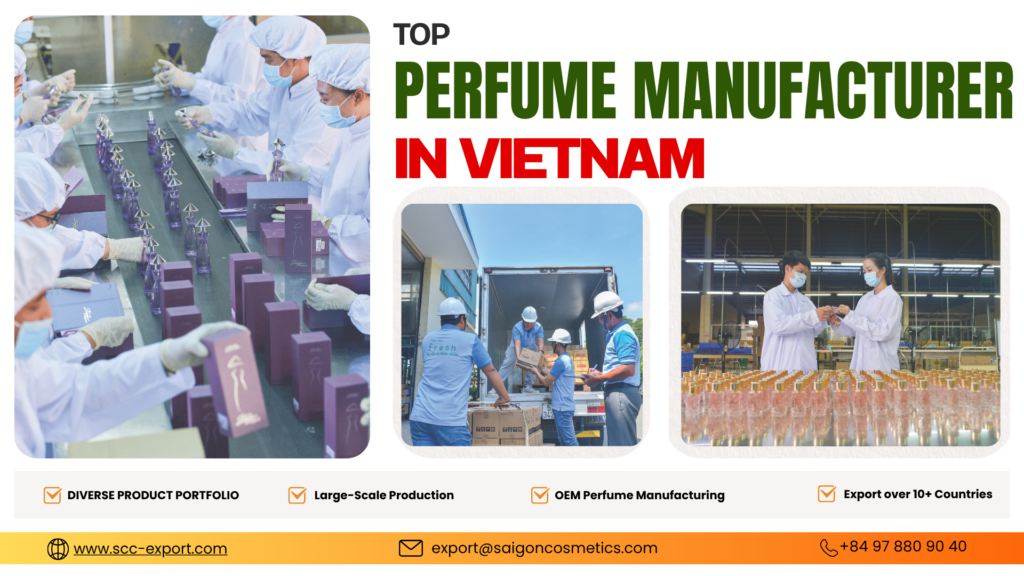
Saigon Cosmetics Corporation – Over 50 Years of Experience in the Beauty Industry
Saigon Cosmetics Corporation (SCC) is a perfume and personal care manufacturer in Vietnam with more than 50 years of industry experience. SCC has roots in the fragrance industry dating back to before 1975 and currently operates a 17,000 m² facility in Cat Lai Industrial Park, Ho Chi Minh City, including approximately 6,000 m² dedicated to manufacturing.
SCC develops products across several categories, including:
- Perfume
- Body Care
- Hair Care
- Mother & Baby Care
- Home Care
This wide product range allows SCC to work with different types of B2B customers, from businesses looking for ready-to-sell products to partners developing products for specific market needs.
Production Capabilities and Manufacturing Operations
One important factor when you evaluate a perfume manufacturer is whether the manufacturer can turn a product idea or requirement into a commercial product at the right scale. SCC operates production lines for different product categories, including perfume, soap, shampoo & shower products, and sachets, supported by dedicated facilities and a workforce of more than 500 employees. The production system serves different market segments, from mass market to premium, with a variety of product formats.
For perfumes, SCC develops different sizes, including 8 ml, 10 ml, 20 ml, 30 ml, 50 ml, and 100 ml.
This flexibility can be useful for B2B customers because different markets may have different requirements for product size, price range, packaging, and positioning.
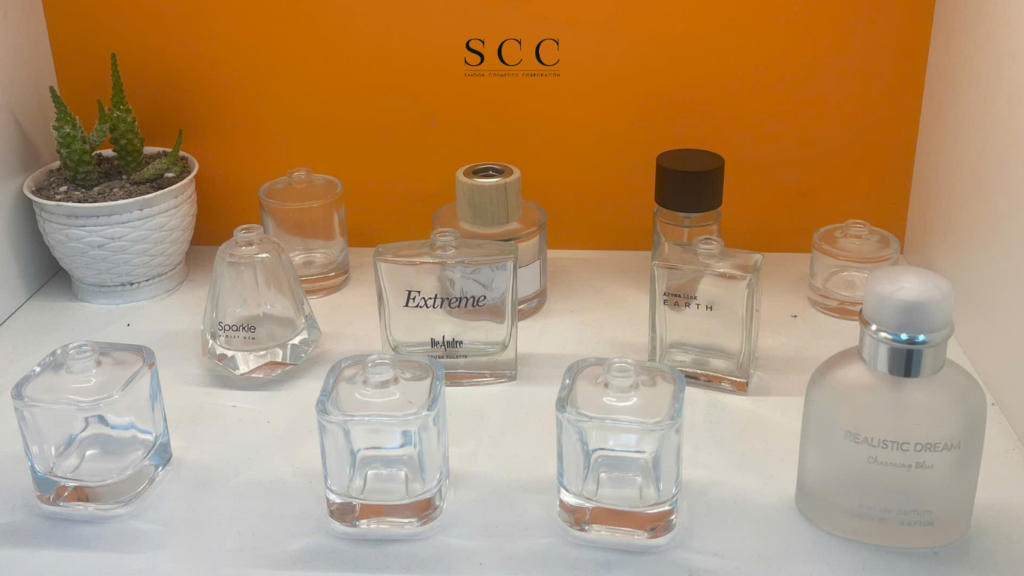
R&D – From Product Ideas to Market-Ready Solutions
A perfume manufacturer needs more than production facilities. R&D capabilities are also important when evaluating a potential manufacturing partner. At SCC, the R&D team focuses on product development and improvement while responding to different market requirements.
For B2B customers, product development can start by understanding the target market, customer segment, fragrance direction, product size, packaging, and other requirements.
These requirements can then be developed step by step into a product that fits the customer’s business and market needs.
Quality Control from Raw Materials to Finished Products
Quality is another important factor to consider when you evaluate a perfume manufacturer. SCC applies ISO 9001:2015 quality management standards and CGMP ASEAN standards in its manufacturing operations. Quality control is carried out throughout the process, from raw materials and production to packaging. Products are checked based on their formula, safety, fragrance characteristics, and other relevant requirements before reaching customers.
For international buyers, this raises an important question: “Can the manufacturer maintain consistent quality as your order volume grows?”
This is something worth considering from the beginning of a B2B project.
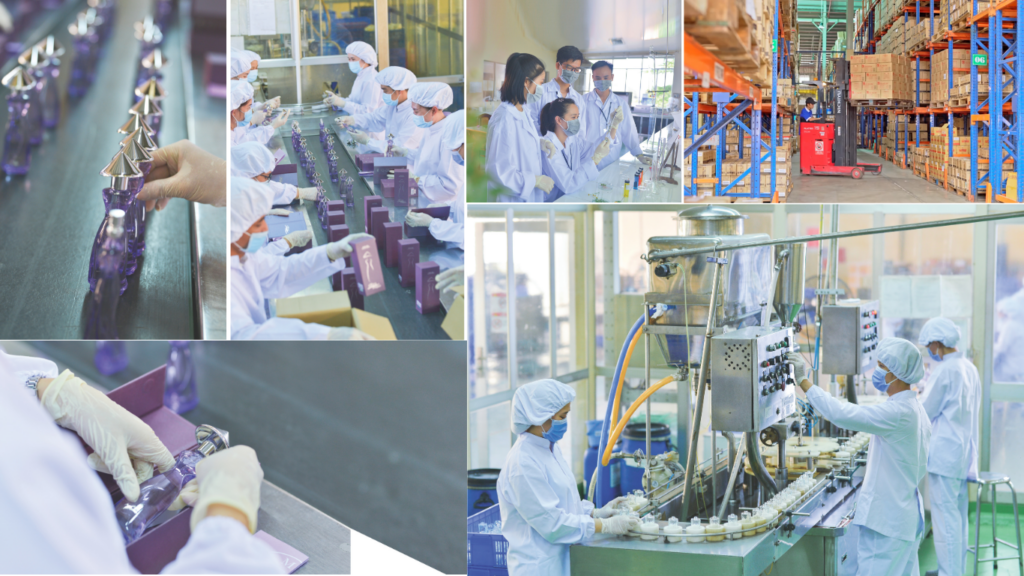
A Diverse Product Portfolio and International Market Experience
A manufacturer with a diverse product portfolio can give businesses more options when developing and expanding their product range. SCC develops products across fragrance, personal care, hair care, mother & baby care, and home care, covering both mass-market and premium segments.
SCC also has an established distribution network in Vietnam and exports products to international markets. The company profile records millions of products exported each year and experience in producing Private Label products for retailers and brands.
For businesses looking for a perfume manufacturer in Vietnam, these factors can provide useful information when evaluating whether a manufacturer matches their current requirements and long-term business plans.
Final Thoughts
Choosing a perfume manufacturer is not only about finding an attractive fragrance or a competitive price.
A more complete evaluation should consider production capacity, quality management, samples, MOQ, customization, R&D, communication, export experience, and production lead time.
Taking the time to check these areas before signing a contract can help businesses build clearer expectations and reduce potential problems during future orders.
The right manufacturing partner is not simply the company that can make your product. It is a partner that can support your product and business as your market develops.
Contact SCC
Phone: +84 97 880 90 40
Email: export@saigoncosmetics.com
Website: www.scc-export.com